Search This Blog

December 16, 2013

2013: DOCUMENTARIES

Discussed here:
Chasing Ice
West of Memphis
The Gatekeepers
Stories We Tell
20 Feet from Stardom
Dirty Wars
Blackfish
Salinger 
The Armstrong Lie


I wish could take global warming naysayers, strap them into chairs, force their eyes open with specula ala Dr. Brodsky's Ludovico technique, and subject them to Jeff Orlowski's Chasing Ice in a continuous loop. The film documents the work of James Balog, a scientist and photographer for National Geographic who, frustrated by the lack of attention paid to climate change, set out with his team on a long range project to definitively show the rapid retreat of ice in geographical regions where it is crucial to a stable ecology. He reasoned that maybe a picture really is worth a thousand words, so his Extreme Ice Survey has been capturing stop-motion, time-lapse photographs of remote areas of Greenland, Iceland, Alaska, and Montana since 2007. The film also chronicles the serious knee injuries and debilitating pain Balog overcomes in order to pursue his mission to raise public awareness of what you and I are allowing to become an inexorable ecological tragedy. This reality eats at me -- and I have no children. Why are we not tearing down the doors of Congress?
NYT Critics' Pick


In 1993, three eight-year-old boys were found dead in West Memphis, Arkansas. Found guilty of committing the murders, which the prosecution suggested were tied to a satanic cult ritual, Jesse Misskelley, Jr. and Jason Baldwin were sentenced to life, Damien Echols to death. Their case was first documented by Joe Berlinger and Bruce Sinofsky in a trilogy collectively titled Paradise Lost: The Child Murders at Robin Hood Hills (1996), Revelations (2000), and Purgatory (2011), which was nominated for the 2012 Best Documentary Oscar. The 1996 film brought celebrity support to finance a legal team that unmasked the incompetence of the West Memphis police. With newly produced DNA evidence, the Arkansas Supreme Court agreed to permit the three to invoke the Alford doctrine, which allows a person to assert his innocence and win release -- only if he maintains a guilty plea.

Amy Berg's West of Memphis focuses on death row inmate Damien Echols and  landscape architect Lorri Davis, the woman who begins a correspondence with him after seeing Paradise Lost in 1996. Though Damien grew up in poverty and unread, as Davis sends carton after carton of books, he devours them. The fact that he thinks seriously and critically about what he reads is reflected in his correspondence with Davis. She makes his cause her life, moving from New York City to Little Rock in 1998, and they marry -- in the prison visiting room -- the following year. When he is exonerated they can finally embark on their life together. West of Memphis is a powerful character study of two determined and principles people fighting a system whose very raison d'etre is to defeat them.

Geoffrey Gray, "A Death Row Love Story," New York Times Magazine, October 13, 2011


Dror Moreh's The Gatekeepers is composed of a series of interviews with the six living former heads (from 2005 until 2011) of Shin Bet, Isreal's secret internal intelligence and counter terrorism agency. All agree that Netanyahu's current policies rejecting a negotiated settlement with the Palestinians are misdirected, and that the torture and assassinations of Hamas leaders bode for a dark future. All have also been passionately committed to fighting terrorism and make no distinction between Arab terrorism and domestic terrorism. One man's terrorist is another man's patriot, one pragmatically observes. Ami Ayalon, who headed Shin Bet from 1996 to 2000, is concerned, however, that "Most Israelis are not listening."
NYT Critics' Pick


Avi Dichter


Ami Ayalon


Avraham Shalom


There is probably a story from your childhood that you know you would have been too young to remember, and yet, because you have heard it so often, feels like a part of your own first-hand memory. There are also stories that evolve in our memories from mere tellings of this-then-this-then-this to artful narratives we subconsciously hope will evoke deeper empathic reactions from those we tell the stories to. Sarah Polley's Stories We Tell is a remarkable, moving film that explores many of the questions about the messiness of life lived and the deep need we have for narrative to impose order on memory so as to give experience meaning. Using home movies, family snap shots and re-enactments interspersed among contemporary interviews with relatives and family friends, Polley seeks to discover the story of her mother. Which metaphor describes what emerges as each teller's perspective accrues: widening ripples, kaleidoscopic patterns, patchwork pieces? Each of us is ordinary and mysterious, each harbors secrets. That Polley's story does not exploit her mother's, but pays tribute to it, is an achievement. See Stories We Tell.
NYT Critics' Pick


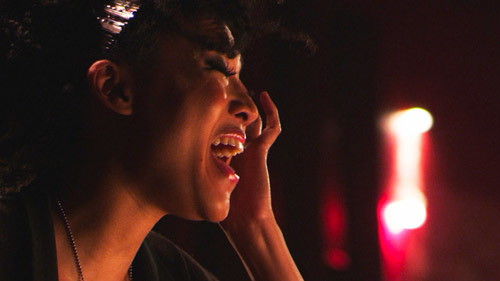
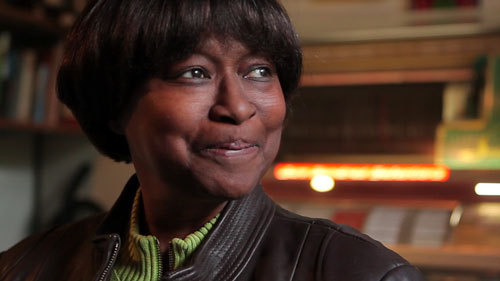
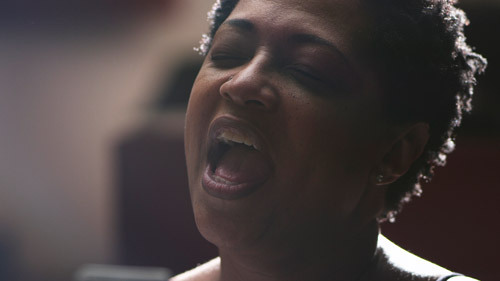
“And the colored girls go/ Doo do doo doo do doo doo do doo …” sings the late Lou Reed in "Walk on the Wild Side." Using archival footage and contemporary interviews, Morgan Neville's 20 Feet from Stardom explores the lives of the women, mostly of color, who have given depth, texture, and harmonic complexity to rock stars, mostly white and mostly male, for almost 50 years. It comes as no surprise that many of them were musically nurtured in the African-American churches of their youths. No small number, in fact, are daughters of African-American preachers. That heritage has enriched the broader story of American music, but the women's personal stories have a decidedly bitter-sweet quality. Early on, each saw backup singing as the gateway to her own recording career. Unfortunately, the trajectory they imagined for themselves has eluded all of them to a greater or lesser degree. Though we know by heart the anticipated primal timbre that will rip through "Gimme Shelter," too few of us can say, "That's the great Merry Clayton."

Darlene Love
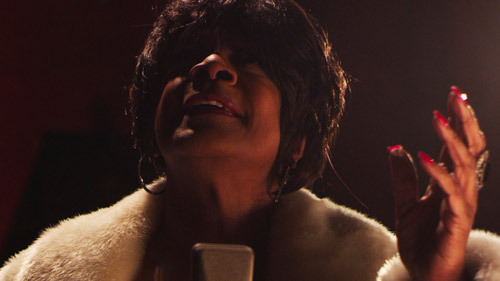
Darlene  Love

Merry Clayton
Merry Clayton

Judith Hill
Judith Hill


Claudia Lennear

Lisa Fischer

Lisa Fischer

Tata Vega
Táta Vega


When was the last time you mentioned, or heard mention of, the Afghan war, even on the nightly news? If you are the rare person who gives the war a thought, how much time elapses between those thoughts? Directed and edited by Richard Rowley, Dirty Wars was written by Jeremy Scahill, a national security correspondent for The Nation and author of Dirty Wars: The World Is a Battlefield and Blackwater: The Rise of the World’s Most Powerful Mercenary Army, and by co-writer David Riker. Scahill narrates the discoveries his investigations unearth about America's ongoing covert military conflicts across the globe. Since 9/11, the so-called "war on terror" has been used to justify clandestine operations against just about anyone we don't like. Scahill begins in Gardez, Afghanistan, with a 2010 February night raid where two pregnant women are among the dead. He soon learns this is not the anomaly we may wish to think: 1,700 night raids take place each week in Afghanistan alone. Scahill's travels take him to Pakistan, Jordan, Algeria, Yemen, Thailand, Indonesia -- the list goes on. "The world has become America’s battlefield, and we can go everywhere," he says. We line the pockets of private corporate contractors with taxpayer dollars and citizens' blood while fueling anti-American hostility across the Middle East, Africa, and Asia, inciting terrorism rather than subduing it. We have realized Orwell's vision. Who ever thought it would come to this?


Jeremy Scahill with a Somali warlord

130605-dirty-war-tease


I do not go to zoos. Aside from parakeets and aquarium fish, I object to keeping animals in captivity, and I am beginning to question those two exceptions. Kidnapping wild animals from their kind and habitat to endure unimaginable conditions of isolation and confinement is the equivalent of trafficking in human slavery. There is no difference. Yet, with my self-righteousness and holier-than-thou indignation, I had never trained my imagination on the conditions under which killer whales are held captive -- the passive sin of never having thought about it. Gabriela Cowperwaite's Blackfish is a harrowing corrective. Like Louie Psihoyos's 2008 The Cove, which documents the brutal mass murder of dolphins off the Japanese coast at Taiji, Blackfish peels back the curtain on places like SeaWorld and its ilk.

In 2010, a six-ton bull named Tilikum killed SeaWorld trainer Dawn Brancheau. The narrative was framed to paint Tilikum as a bad seed who had attacked and killed twice before at other venues. But Tilikum is by no means alone among captive orcas who have attacked trainers and marine park visitors. The film contends, and I can find no evidence to refute it, that there is no evidence of a killer whale, despite the name, ever killing one of its kind or attacking a human being in the wild. There is speculation that, having spent most of his lifetime in captivity, abused by dominating cows or held in isolation tanks so small he was immobilized, Tilikum lashed out in the only way he could. Reporting Brancheau's death on CNN, anchor Jane Velez-Mitchell asks the obvious: "If you were in a bathtub for 25 years, don't you think you'd get a little psychotic?"

Among the broader questions Blackfish confronts is speculation about the emotional life of whales. Cowperwaite interviews evolutionary neurobiologist Lori Marino, who explains that orca brains possess a limbic system that has allowed them to evolve highly emotionally complex family and social structures. Leading scientists now speak of cetacean culture, and their understanding would proscribe the traumatizing practice of removing calves from their mothers. If that sounds scientifically objective, dispassion is dashed when we see footage of a mother as her calf is stolen from her, and hear her days of keening screams -- sounds that will ring in your ears long after you leave the theater.


Someone should have taken a page from Lee Daniels and titled this pseudo-documentary Shane Salerno's Salinger. It presents itself as the definitive word on J.D. Salinger, while drawing problematic conclusions about the impact WWII had on his psyche and throwing up dubious -- and salacious -- speculations about his romantic tastes and motivations. That the intensely private writer would be so relentlessly stalked by the persistent Salerno is one of the ironies of Salinger's legacy. In all fairness, as long as they are not put into the service of amateur psychology, some interesting aspects of Salinger's life emerge. Much too much, however, is made of the three damaged young men who used The Catcher in the Rye to defend assassinations (Mark David Chapman's of John Lennon, Robert John Bardo's of Rebecca Schaffer) and an attempted assassination (John Hinckley's of Ronald Reagan). All this and clumsy re-enactments of the tortured writer at his typewriter or in his studio in the woods, and the booming music foreshadowing impending doom and gloom, make Salinger a bombastic mess that is impossible to take seriously. 

Salinger Movie Review


Alex Gibney's The Armstrong Lie examines Lance Armstrong's life of doping on the Tour de France bicycle racing circuit. The documentary excavates Armstrong the boy and finds an indomitable will to win. The subsequent young man is willing to take whatever actions necessary to make winning a reality and a constant. I have never condoned the argument "I thought it was OK because everyone else was doing it," but I have to admit that the film caused, if not a seismic shift in my paradigm, a bit of a fault line if only in the consideration of professional sports. Suffice it to say, I came away unwilling to pass judgment.

On the other hand, though I was at one time involved with Formula I and vintage sports car racing, I have always been a pretentious snob toward Nascar and its fans, but seeing the crowds along the route of the Tour de France forced me to think again. I was appalled, and not just with the stupid costumes and noise makers and whatever else. No, think Nascar with the fans on the track, literally on the track. People grab cyclists, jump in front of them, chase behind them, create tangles amidst the peloton itself. At least race car drivers would have the advantage of engine noise to drown out the roar of the crowd. Not so cyclists. It is insanity!!! I had no idea, and apologize to Nascar fans everywhere.

2013: THE OLDER CROWD

Discussed here:
Stand Up Guys and The Big Wedding
Quartet
Unfinished Song
Love Is All You Need
Enough Said
Still Mine
At Any Price
Nebraska

First let me say that I am glad to see older actors getting parts, but... what is the deal with the silly vehicles that are being churned out for them? Since the wonderful performance he turned in for the 2009 Everybody's Fine, De Niro has been cranking out three to five movies a year. He's the biggest offender in a glut of caricatured geriatrics, which has become its own trope as the Fockers, Red / Red 2, et al. developed into franchises.

These movies are gratuitous. We just don't need them, and the formulae have been done to death. This time it's Stand Up Guys (Fisher Stevens), a geriatric crime caper with De Niro, along with Alan Arkin, Al Pacino and Christopher Walken, who have also become staples in old geezer round-ups. At least everyone looked like they had fun making Stand Up Guys, unlike The Big Wedding (Justin Zackham) in which De Niro and his fellow aging cast members, including Diane Keaton and Susan Sarandon (demonstrating that actresses are not immune from the lure of these things), exude discomfort with an impossibly inane script. On Christmas day Grudge Match with De Niro and Sylvester Stallone opens, which the previews have convinced me to miss. And now I'm seeing previews for what looks to be a dreadful Christmas release called Last Vegas, in which Michael Douglas and Kevin Kline join De Niro and Freeman in idiocy.

Hey, guys -- Bruce Willis, Helen Mirren, Bette Midler, Dustin Hoffman, Barbra Streisand....  You're all millionaires, so it's not like you need the money. I have to assume it's because you like to work that you agree to be in this drivel. Can't someone out there write some good -- and complex -- scripts for these talented people?!!?


Stand Up Guys


The Big Wedding


Second, the British do it so much better. Though it is Dustin Hoffman's directorial debut (and it shows), Quartet (2012) is a decidedly British enterprise that is The Best Exotic Marigold Hotel redux. This time the retirement community is not a rundown establishment in India, but an old folks home for retired musicians, and this time rather than on the periphery of the cast the regal Maggie Smith takes center stage as the diva who has reluctantly come there to live -- or reign. As with Marigold the risk of devolving into superficiality is averted by a fine cohort of actors (including Michael Gambon) and by a script that allows of some emotional complexity, unlike some of its American cousins. Written by Ronald Harwood from his play.


And sometimes the Brits don't do it better as in Unfinished Song, despite two of the greatest British actors of their generation, Vanessa Redgrave and Terence Stamp, in the leads. Marion is just too sweet and Arthur is just too curmudgeonly, and the choir to which Marion is devoted is full of the usual old fogey suspects. And Marion is dying of cancer... Kleenex anyone?


Third, just because it's from a European director doesn't mean it will automatically be good. Love Is All You Need is another disappointment. Danish director Susanne Bier's mess of a movie stars Pierce Brosnan as a British produce importer whose late wife was Swedish so his business is headquartered in Sweden. As he drives into airport parking -- he's going to his Italian estate where his son is getting married -- a Swedish woman (Trine Dyrholm) backs into him. Turns out she is going to Italy where her daughter is getting married. Get it? In Italy we are introduced to respective son and daughter, though from our first glimpse, son does not seem comfortable with daughter. Indeed we are beaten over the head with the implication that he is more taken with Kenneth, a member of his wedding party, and when that attraction is finally acknowledged with a kiss, my clueless audience gasped and shouted out in disgust, while I muttered, How could you not have known by now? The movie has the subtlety of a bludgeon, amplified by a soundtrack that blurts out almost every rendition of "That's Amore" ever recorded.


Finally, even in this genre it is possible to encounter gems.

Nicole Holofcener wrote and directed Enough Said whose characters are not elderly, just middle aged. Along with her sensitive ensemble of actors she has created something rare: a story that is sweet without being saccharine, touching without sinking to emotional manipulation, and made all the more bittersweet by the late James Gandolfini's deeply felt, gently quiet performance. Julia Louis-Dreyfus is Eva, a massage therapist and divorcee fretting about her daughter's imminent move to college. She meets James Gandolfini's Albert at a party and they sort of hit it off. What Albert doesn't know is that his ex-wife (Catherine Keener) is one of Eva's clients, a fact that Eva inadvertently discovers, then exploits, and so, what begins as a comic twist moves toward the semi-tragic and into questions about the ethical nature of our relationships with each other and the consequences of our actions.
NYT Critics' Pick


Like Sarah Polley's Away from Her and Michael Haneke's Amour, Michael McGowan's Still  Mine takes a sobering look at the realities of dementia and what the reality of true love involves. It is also the true story of Craig Morrison (James Cromwell) who, in trying to build a house that will be safe for his beloved Irene (Geneviève Bujold), encounters all manner of often non-existent building "codes" from a town bureaucracy that throws up one obstruction after another simply because it can.
NYT Critics' Pick


Edward R. Murrow: "Who owns the patent on this vaccine?" Jonas Salk: "Well, the people, I would say. There is no patent. Could you patent the sun?"
To move far from my subject, I saw Ramin Bahrani's At Any Price earlier in the year, about a hypocritical Iowa farmer (an outstanding performance by Dennis Quaid) who is at once the local sales rep for a genetically modified seed company while using the last year's harvested seed to save himself a small fortune. I include it in contrast to Still Mine in which government regulation wrongly and punitively harasses an individual. Trying to explain the dilemma agribusiness has created to his son's girlfriend, Henry Whipple blames the seed companies: "They've patented life," he says, and in this he is right. Here is a story in which government protects the harmful practices of big business. As is often true of American cinema, the landscape is itself a character in the film, and the story is an allegory of what has happened to the American ethos through the mirror of a generational narrative, from a proud sacrificing grandfather (Red West who also co-stars in Bahrini's Goodbye Solo), to a cutthroat father, to a son who is hoping to escape the farm and live a life of reckless excitement.
NYT Critics' Pick


Still Mine and At Any Price got me to thinking about how misguided the Tea Party screed against regulation is. Regulation that hobbles common sense endeavors, as in Still Mine, is absurd and should be rooted out. But regulation that protects the public against corporate ecological degradation and financial tyranny is a necessary and desirable state of affairs. That they can't tell the difference is potentially tragic.  


In the 2013 section titled "The Heist," I discussed Ken Loach's marvelous little movie The Angels' Share, in which the material object of the quest is merely a vehicle for the quest's larger purpose. Like Loach's characters, Alexander Payne's take to the road. This time, however, the quest is set up as futile. Nevertheless, the journey will matter in Nebraska. Bruce Dern gives an remarkable performance as Woody, a taciturn old man who long ago tuned the world out, having given up on any meaningful place for himself in it. His son David knows there is no million dollar prize waiting for his father to claim. Still, he agrees to drive him from Billings, Montana, to Lincoln, Nebraska.

Like At Any Price, Nebraska takes a slice of life from a heartland community's decline and dysfunction in the wake of corporate farming. Payne paints a bleak picture of his native Nebraska, and the people who populate it, American grotesques in the tradition of the characters with whom Sherwood Anderson populated Winesburg, Ohio. Will Forte as David does a wonderful job of communicating a range of emotion, while, with the exception of one mild outburst, biting his proverbial tongue. David seizes the opportunity of the journey to come to terms with Woody's life and impending death, and Nebraska asks us to come to terms with the death of an American dream that was really just a myth in the first place.
NYT Critics' Pick


December 9, 2013

2013: THE BEATS: ON THE ROAD & KILL YOUR DARLINGS

Why has a steadily increasing interest in the Beats emerged over the past four years? They've never entirely gone away, but I do not see young people championing their literature or emulating their rebellion. Grown children who still live with their parents do not seem true heirs to the Beats.

If anything, the Beats have become caricatures in some respects, especially William S. Burroughs who, in all fairness, created his own, which had the effect of making him a cult figure. Yet in so doing he penetrated the popular culture more pervasively than the rest. David Cronenberg adapted Naked Lunch in 1991, a number of Burroughs's short stories have made it to film, he has been featured in character roles and cameo appearances in a number of movies, and IMDb lists no less than 37 appearances on screen as "Self." In 2002, Gary Walkow covered the life of Burroughs and his wife Joan Vollmer in Beat, and in 2010, Independent Lens did a documentary, William S. Burroughs: A Man Within. An earlier documentary by Lars Movin and Steen Møller Rasmussen, Words of Advice: William S. Burroughs on the Road, was released in 2007, and was awarded the Danish Film Institute's Roos Award.

In 1986, Richard Lerner and Lewis MacAdams explored Jack Kerouac's life in their documentary What Happened to Kerouac? but there hasn't been much about Kerouac, or Allen Ginsberg, by contrast. Until...

In 2010, Rob Epstein and Jeffrey Friedman's kinetic, exuberant, wonderful (with the exception of the misplaced animation) Howl blew through in a single week. Toward the close of 2012, Walter Salles brought Kerouac's On the Road to the screen. Michael Polish's Big Sur, adapted from Kerouac's novel, was released in October but has not met with the media blitz the biographical Kill Your Darlings has received. Stephen Holden gives Big Sur a glowing review, and it's a NYT Critics' Pick, but I have heard nary a peep about it at middle America's cineplex. I contend that Hollywood's interest in the Kill Your Darlings true story stems not so much from the literary circle it involves as from the sensational nature of the episode, and Hollywood likes sensationalism. Now I come to find out that Steve Buscemi is directing Queer, a film based on Burroughs's first two novels, Junkie and Queer.

Last year also saw the first production of Jack Kerouac's play The Beat Generation at the University of Massachusetts Lowell, the writer's hometown. The AP approached Todd Tietchen, an assistant English professor there, who said the renewed interest in Kerouac and the Beats comes because they "asked 'tough questions' about post-war society, consumerism and securing the American Dream through mortgages and auto payments.... '[Y]oung people now, as they deal with a challenging job market, are asking those questions.'" Hmmm... That may be a reason U Mass Lowell decided to stage the play, but it does not suggest a renewed interest in Kerouac, Ginsberg, Burroughs, et al. The Orlando Sentinel similarly proclaims that Salles's film "renews interest in Jack Kerouac." Young people are rightly distressed about the dearth of decent jobs, but that's not leading them to the Beats in droves, and it speaks to nothing literary.

Maybe I don't know enough young people to judge the zeitgeist, but I am not seeing teens and twenty-somethings lolling around Starbucks reading Howl or On the Road or Naked Lunch. Rather, I believe the interest resides in the resonance this constellation of individuals had then and has now for the LGBT community. If so, it is the Beat Generation's non-conformity, their radical sexuality and rejection of received standards, not the literary experimentation and innovation, that this generation of those actively seeking gay civil rights embraces.

In the Stonewall era of 1969 Greenwich Village, there were still those who understood the Beats from the point of view of social and literary rebellion. On June 28, the key figures -- Ginsberg, Kerouac and Burroughs -- were living and contemporaneous to the scene, though Kerouac would die a mere four months later. Dudley Clendinen and Adam Nagourney write in Out for Good: The Struggle to Build a Gay Rights Movement in America," that

"like the holders of a secret, [the homosexual community] had an advantage which was a disadvantage, too, and which was true of no other minority group in the United States. They were invisible. Unlike African Americans, women, Native Americans, Jews, the Irish, Italians, Asians, Hispanics, or any other cultural group which struggled for respect and equal rights, homosexuals had no physical or cultural markings, no language or dialect which could identify them to each other, or to anyone else ... But [the night of the Stonewall uprising], for the first time, the usual acquiescence turned into violent resistance...."

A familiarity with the Beats' writing was one way to make yourself known in '50s and '60s America. Even into the 1970s, high school and college students treasured tattered copies of On the Road. Today, a little more than a decade and a half after Ginsberg's and Burroughs's deaths, I would venture that simply knowing who they were is enough. It also seems to be enough to have driven a number of film makers to plumb this distinctive circle of renegades, though where Epstein and Friedman's Howl succeeds in getting at the words, On the Road and Kill Your Darlings fail.

~~~~~~~~~~~~~~~~~~~~

As is true of Australian film as well, the landscape participates as a dominant character in the American mythology: from the Hudson River School and the Luminists to Albert Bierstadt's paintings of the Western Expansion to Ansel Adams's photographs; from Nathaniel Hawthorne, James Fenimore Cooper, Thoreau, Willa Cather and William Faulkner to Cormac McCarthy and Louise Erdrich; from John Ford to Sam Peckinpah; from The Lone Ranger to Breaking Bad to the oeuvre of Ken Burns. In 1957, Jack Kerouac's On the Road codified the road genre, and Walter Salles's film gives ample shrift to the landscape. José Rivera's adaptation of the novel is reverant, but Kerouac's incantatory prose can't help but lose something in the translation from page to screen, and the reckless, rebellious, transcendence seekers don't quite make it into the theater.


William Faulkner is attributed with saying, "In writing, you must kill all your darlings." However, Faulkner is paraphrasing Sir Arthur Quiller-Couch, the renowned British critic, scholar and educational reformer who published under the pen name Q. In a series of lectures published in 1916 as On the Art of Writing, in the final chapter "On Style" in an entry on "What Style Is Not," Quiller-Couch instructs, "Whenever you feel an impulse to perpetrate a piece of exceptionally fine writing, obey it – wholeheartedly – and delete it before sending your manuscripts to press. Murder your darlings." Get rid of those bits of writing you are most in love with because they are quite probably not at all as good as you believe. In all likelihood they are personal to you alone and will not translate to the reader. In John Krokidas's Kill Your Darlings, Professor Stevens (John Cullum) -- an amalgam of Lionel Trilling and Meyer Schapiro -- gives his students this same advice.

But Kill Your Darlings is only marginally about the genesis of a literary revolution. Rather, what Quiller-Couch and Faulkner and Professor Stevens intend as a metaphor is literalized when the preyed upon Lucien Carr (in an exceptional performance from Dane LaHaan) turns on his sexual predator, the professor David Kammerer (Michael Hall).

Daniel Radcliffe is an excellent young Ginsberg, and though I do not agree with A.O. Scott that Ben Foster and Jack Houston as Burroughs and Kerouac "are content with celebrity impersonation," I do believe that he provides a succinct critique of the film: "The freedom to abandon rhyme and polite diction becomes the vehicle and symbol for other kinds of freedom. Lucien’s mantra, 'First thought best thought' (which is the opposite of the writerly wisdom evoked in the film’s title), is an argument against repression in all its forms, even though Lucien himself cannot quite live by it."
NYT Critics' Pick

November 20, 2013

2013: WOMEN'S WORLD

Discussed here:
Stoker
Girl Most Likely
Blue Jasmine
In a World...
Identity Thief and The Heat

Gothic fiction's prominent elements are commonly listed as: psychological and physical terror, mystery, the supernatural, ghosts, haunted spaces and Gothic architecture, death, decay, doubles, madness, secrets, hereditary curses. Stoker has it all. Gothic romance also has, and for some reason this feature does not appear in the lists, repressed female sexuality, a predominant element, if not of all Gothic literature, certainly of Gothic tales told by men, full of heaving bodices representing libido.

Stoker is the first English-language film from Korean director Park Chan-wook, best known in the U.S. for Oldboy (which I just re-watched in anticipation of Spike Lee's remake scheduled for release late this year), the second film in his vengeance trilogy. Park earned a degree in philosophy before working in film, and it shows in his work. Park's characters are ordinary people who find themselves in situations that drive them to extremes of violence. The violence could seem gratuitous to the casual viewer, but an undertone of something more pulses in his stories, epistemological questions about the nature of knowledge and understanding, metaphysical forays into the nature of reality, and in the case of Oldboy, questions posed by normative ethics.

Stoker opens on India Stoker (Mia Wasikowka). It's her birthday at the threshold of womanhood. Her father has just been killed in a car accident. At the funeral his brother, Charlie (Matthew Goode) -- a mysterious stranger of whom she is entirely unaware -- announces that he will be staying with India and her fragile -- and seductive -- mother Eve (Nicole Kidman). Charlie professes to be a world traveler. He also has a disturbingly sinister charisma and a manipulative disposition. The housekeeper disappears; a concerned relative shows up; the Hitchockian suspense builds. The neo-Gothic Stoker mixes horror and romance with Park's hallmark aesthetic elegance on the one hand and brutal violence on the other. Not for the faint of heart.


Imogene (Kristen Wiig) lives blithely among the affluent on the Upper East Side where she attends fund raisers and does lunch. When her boyfriend dumps her, things go from bad to worse until a court order puts her into the custody of her benighted New Jersey mother Zelda (Annette Bening). New Jersey is the last place an aspiring socialite like Imogene wants to be, especially since the household also shelters her weirdo brother Ralph (Christopher Fitzgerald), a roomer (Darren Criss), and Zelda's beefcake lover who claims to be a secret agent for the CIA. Directed by Shari Springer Berman and Robert PulciniIt, Girl Most Likely lays out a predictable setup. A plot about a girl who wants to put her past behind her goes through a few implausible twists in order for her to find that home is where the heart is.


I have great admiration for Woody Allen as a filmmaker. I remember when Interiors came out in 1978. People were outraged and felt betrayed because the film was not a comedy -- much as Bob Dylan's audiences booed when he went electric. I like Allen's darker side -- September, Another Woman, Crimes and Misdemeaners, which is one of my all-time Woody favorites, and Shadows and Fog, which I thought fell short. I did not like Match Point, To Rome with Love and Vicky Christina Barcelona, which everyone else loved, and I really liked Whatever Works, which everyone else hated. I consider Radio Days and Zelig brilliant. He does so much, tries everything, and though his neuroses are his hallmark, to look at his oeuvre one would be hard pressed to believe that he fears failure. So some of the films are better than others.

I was prepared to dislike Blue Jasmine, but I liked it. I had read that the title character is a female version of the Woody Allen character, but I don't agree with that (rather shallow) assessment. The plot is old, but Cate Blanchett's performance is off the charts. Everybody is good -- Sally Hawkins, Bobby Cannavale, Andrew Dice Clay -- even Alec Baldwin isn't bad. But Blanchett -- just when I am certain I have not a shred of sympathy for her self-centered character, Blanchett manages to give her humanity.
NYT Critics' Pick


In a World... is written and directed by and stars Lake Bell as Carol, a woman trying to break into the decidedly male world of voice-over. I remember as a girl, both my parents, not just my father, telling me that women simply could not do television news because their voices are too shrill. This is nothing against women, mind you. It's just that women's voices are unpleasant.

At 30 Carol still lives in her father's house. Sam (Fred Melamed) is not just her father but one of the giants of the voice-over world. He loves his daughter, but refuses to encourage her because 1) he's too self-absorbed and 2) he's a sexist of a certain age. To make matters worse, Sam is not Carol's only detractor in a subculture of underhanded rivalries and over-sized egos where up and coming talents vie to be taken into the fold. The casting is spot on, and Lake Bell's script steers clear of cliché, finding humanity and vulnerability even in characters who are potentially less than likable in this little world unto itself.
NYT Critics' Pick


Seth Gordon's Identity Thief  and The Heat, directed by Paul Feig (Bridesmaids) and co-starring Sandra Bullock, would both be really bad movies were it not for Melissa McCarthy's kinetic energy, rapid-fire improvisational delivery, and wildly self-confident physicality. The phrase "over the top" was invented for her. She is queen of the pratfall, empress of slapstick, an impish roughhousing buffoon who, without your even knowing it, is creating a multidimensional character that she springs on you unexpectedly about halfway or so through the movie. McCarthy burns with a magnetic attraction that kindles the chemistry between herself and whoever is cast opposite her.


Identity Thief


The Heat

November 18, 2013

2013: NEO-NOIR

Discussed here:
Gangster Squad
Broken City
Only God Forgives
(The Counselor is discussed elsewhere.)

I hope you spared yourself Ruben Fleischer's Gangster Squad, but if you had the misfortune to see it I am certain that like me, it made you mourn film noir. The story is hackneyed, and the clunky dialogue sounds like a laundry list of period argot. Likewise the set dressing and the costumes.

The notoriously vicious Mickey Cohen (Sean Penn), at the center of the story, is being pursued by an LA secret police squad operating carte blanche. Cohen was a boxer who left boxing to run a gambling operation for Al Capone's Chicago Outfit. He briefly spent time in prison for the deaths of several gangsters in a card game gone wrong, then went to Los Angeles to work for Bugsy Siegal's sports book operation -- which is where we find Cohen in the movie.

Were the film based on an exploration of sociopolitical dysfunction, where political corruption and organized crime work in concert to facilitate Cohen's psychotic megalomania, it might have been interesting. Instead the characters are parodies and the CGI runs painfully amok.

(Though it probably won't get here until next year, I am looking forward to Claire Denis's Bastards, not only because I greatly admire her as a filmmaker and storyteller, but because I have read that the film is a genuine, and brilliant, contemporary noir.)


Broken City is a workable, if flawed, tale of political corruption. The city is New York. Russell Crowe plays the power hungry mayor running for a second term. Mark Wahlberg plays the ex-cop who has been forced to resign because of questions surrounding a shooting so he's eking out a living as a PI. Mayor Hostetler summons Billy to his plush office and makes an offer Billy is not allowed to refuse. As things get darker it becomes clear that Hostetler's wife (Catherine Zeta-Jones) is up to something no good, but what? Everyone turns in professional performances, and Allen Hughes's direction usually makes us willing to suspend disbelief, even when we know better.


I did not hate Nicolas Winding Refn's "corpse of a movie" as many critics did. Refn and Rosling managed a thrilling Drive last year, but it is an understatement to say that Only God Forgives has none of that energy. Kristin Scott Thomas is Crystal (as in crystal meth?), a drug lord anti-mother who demands that her younger son Julian, played by a zoned out Ryan Gosling, exact revenge for the murder of her elder favorite son. She wants the killer's head on a platter ala Herodias, not metaphorically but literally. Chang (Vithaya Pansringarm) is a retired policeman-cum-vigilante whom Julian enlists to do the deed, and apparently the surrogate God of the title. Everyone agrees it's all style/no substance, but I, dare I say it, kinda liked the style part, especially the cinematography. If you don't mind gore and enjoy richly textured visual composition, there might be enough here for you. Or maybe not.


Ryan Gosling in ONLY GOD FORGIVES

2013: THE HEIST

Discussed here:
Trance
Now You See Me
The Angels' Share

Danny Boyle's Trance enters the canon of compromised memory movies like Memento, Eternal Sunshine of the Spotless Mind, Mulholland Dr., the wonderful indie Moon, the surprisingly OK Vanilla Sky, the unbelievably horrible Inception, and the almost as unbearable Shutter Island (and I'm a Scorsese devotee). It's a heist movie, which I love; a psychological thriller, which I love; a con movie, which I love; a compromised memory movie, which I love. All rolled into one.

There's also a clever subtext about Goya, whose painting "Witches in the Air" is being auctioned and is the target of the heist, being the progenitor of modern art. If this movie is not nominated for best cinematography Oscar, the Academy is out of its mind. I know art and follow the art world, but I could only wish I had the art historical ability to recognize every visual allusion in this film. At one point characters behind three glass screens look like a Francis Bacon triptych, which makes it seem ironic that just last week Bacon's 1969 triptych of Lucien Freud became the most expensive artwork ever sold at auction.

Trance is smart, clever, a visual feast accompanied by a throbbing electronic soundtrack by Underworld, Boyle's collaborators on four other films including Trainspotting.

("Trance" is not only the title of the film. Trance music emerged in Germany in the 1990s and is among the musical genres that Underworld incorporates along with techno, drum & bass, and progressive house music.)

Trance (2013) Poster


Louis Leterrier's Now You See Me is to movies what McMansions are to residential architecture. Look beneath the surface bling at the stick construction armature, and there's no there there. We enter the world of high powered prestidigitation where one upmanship is big and egos are bigger. A mysterious guiding hand using Tarot card invitations brings four rival magicians together who become the Four Horseman. Their stunts involve long distance, computer orchestrated bank heists with a Robin Hood twist, each performance culminating in money fluttering down like confetti into crowds that have been oppressed by the 1%. As the plot lumbers along it grows tentacles that entangle any logic it might have started with.


And a drum roll, please...

At 76, Ken Loach (above) has followed up his delightful 2009 Looking for Eric with a marvelous little gem of a movie where the 2% of single malt whiskey that evaporates during the aging process, known as "the angels' share," becomes a metaphor for humanitas. Like Kirk Jones's 1998 Waking Ned Devine, The Angels' Share and Looking for Eric recall the tradition of Ealing Studios, especially the 1949 Whiskey Galore! directed by Compton MacKenzie. What these films have in common is that the material object of the quest is merely a vehicle for the quest's larger purpose, which is its power to bring the community together.

New dad Robbie finds himself in trouble with the law -- again -- and winds up in a Glasgow community payback program under the guidance of Harry, played by the ever wonderful John Henshaw. Harry has a penchant for fine whiskey and takes his miscreant charges to a tasting, where it turns out Robbie has the gift of a nose. The young people's pursuit ensues and will ultimately bring redemption to them all.

(The soundtrack is punctuated by the Proclaimers' "I'm Gonna Be (500 Miles)" from one of my all-time favorite albums.)

November 15, 2013

2013: MUSIC AND THE PAINT TUBE

I go to a lot of movies, a lot of movies. I usually know a reasonable amount about what I'm going to, but every now and then.... In 2009, I walked into the theater thinking I was going to a film about global water shortages. It was called Thirst, and I was convinced I had read that it was an excellent documentary. Instead it was Park Chan-wook’s film about a priest who volunteers to act as a guinea pig to find a cure for an epidemiological disease. The experiment seems to have miraculously worked until it is clear the infection has taken hold. A tainted blood transfusion saves him, but at the cost of turning him into a vampire with considerable carnal appetites. The movie devolves into gratuitous excess, even for a vampire movie. I like Park’s 2003 Oldboy, but Thirst spirals out of control. Or maybe it's just that if one walks in expecting a documentary, and one gets Park, one's reception is bound to be off.

This year it was a horse of a different color.

I am a fan of concert films, the greatest of all being Martin Scorsese's The Last Waltz (1978). The Velvet Underground and Nico: A Symphony of Sound (1966), Don't Look Back (1967), Monterey Pop (1968), Gimme Shelter, Let It Be, Woodstock (1970), Fillmore (1971), Ladies and Gentlemen, The Rolling Stones (1974), Stop Making Sense (1984), Rattle and Hum (1988), Bridges to Babylon (1998), Buena Vista Social Club (1999), Heart of Gold (2004) and Neil Young: Journeys (2011), I'm Your Man (2005), Shine a Light (2008)....

The list gives a sense of my taste, so I was not prepared to like End of the Century: The Story of the Ramones (2003), Metallica: Some Kind of Monster (2004), Dave Chappelle's Block Party (2006), or Beats, Rhymes and Life: The Travels of a Tribe Called Quest (2011), but I did. I liked them very much.

So a movie pops up for which there have been no trailers to my knowledge, and all I know is that it is a concert film. It's called One Direction: This Is Us, and I go. I did not know that One Direction is the name of the band, much less what kind of band it is.

As I walk in, I'm a little uncomfortable because the only people there are pre-teen and teen girls. No boys, and the only adults I see are one couple who has brought their three little girls, and a dad who has brought two little girls. And then there is 60-year-old me. I had paid for the ticket, the theater was filling up, so I decided to experience it as a cultural exercise.

For those like myself who have no clue as to who/what One Direction is, it is a British-Irish boy band. Ranging in age from 19-21, they are the brainchild of Simon Cowell, a judge on The X Factor, who, after listening to each lad audition individually, thought to package them as a group. "Package" is the operative word. They are a prepackaged commodity with a prepackaged sound, doing prepackaged choreography on a prepackaged tour. Each is winsome in his own way, but it is all packaging and no substance. The fact that they admit that this is a short chapter in their lives is actually rather endearing, and none is intent on pursuing a lifelong career in music.

I have tried to figure out why there is no  mainstream music being made any more that I have an interest in. GE Focus Forward 3-minute films sometimes precede the trailers at my indie/foreign film theater. One is called "The Auto-Tune Effect." It's about pitch-modulation audio software, which the film describes as the audio equivalent of Photoshop, and if the interviewees are correct, and I have no reason to doubt  them, it is ubiquitous. That may be the answer I've been looking for.

I have a friend who is a committed plein air painter. En plein air means "in the open air" and refers to the practice of painting landscapes outdoors from life. In 1841 a portrait painter, one John Goffe Rand, invented the paint tube. That may not sound like much, but it transformed the way painters work. Before the paint tube, preparing paints meant grinding pigments and mixing them with linseed oil, then hauling the resultant tints around on horseback in pig's bladders. This made painting outside the studio if not prohibitive, cumbersome at the very least. The paint tube changed that. Rather than sketching out of doors, coming back to the (often badly lit) studio, enlarging the sketch in transferring it to canvas, and painting with those painstakingly prepared paints, painters could easily paint outdoors in the open air. This, along with the concurrent development of photography, had much to do with the rise of Impressionism.

With the camera to record representational images and the paint tube providing a convenient means to paint in real time, so to speak, artists began to move away from the subjects of traditional studio painting -- the monumental themes of war, mythology and religion; portraiture as a record of status and position; static still lifes. They began instead to explore scenes of domesticity and urban sights of regular people doing regular things in ordinary places. They could also paint directly from nature, where light changes with moving clouds and the time of day, and breezes flutter leaves and flowers and drying laundry. Suddenly what the artist sees is not static, and that is very much a part of the Impressionist aesthetic. The ideal became spontaneity and an emphasis on the play of light and movement. A studio model cannot sit perfectly still, so even portraits took on a sense of movement in the hands of the Impressionists.

Music needs spontaneity, too. It needs voices that are imperfect and human and individual, not homogeneous and prepackaged. The boys in One Direction seem to be nice, sincere young lads, but just as CGI threatens to ruin the cinema, pitch-modulation software and prepackaged pop idols threaten to ruin music. Not that there won't always be rebels out there, it's just getting harder to hear them through the noise.