Search This Blog

January 23, 2015

TRUE STORIES

Georges Méliès filmed the first biographical moving picture in 1900.[i] His subject was that enduring character, Jeanne d’Arc, whose mythic stature has captured the imagination of many. Martyrs, mystics, and biblical personages figure prominently in the genre, as do folk heroes, outlaws, and Lotharios; tortured artists of the stage, the pen, and the canvas; composers and sculptors; celebrities and sports giants; explorers, spies, scientists, and inventors; military and political leaders, monarchs, and despots; whistleblowers and underdogs.

Georges Méliès 1900 Jeanne d'Arc
The decade from 1900-1910 would see only five more biographical pictures; 1910 to 1920 and 1920 to 1930, thirty-five and thirty-two respectively. Then in 1940 alone, over twenty biopics were released, and the decade from 1940 to 1950 produced 135 in total. In the 1950s the number jumped to almost 200, but dropped in the ‘60s to around 100 again as the Hollywood studio system waned and with it, historical epics. Concurrently, New Wave and other European movements began to influence film worldwide, aesthetically and thematically, and favored original screenplays over retellings of lives lived. During the ‘70s the number of biopics again hovered around 100 (to which Ken Russell made a sizable – and eccentric – contribution) as independent film makers explored not only real life stories but original narratives concerning contemporary political and social issues. The ‘70s also saw the emergence of the blockbuster in the U.S. (Francis Ford Coppola’s 1972 The Godfather, William Friedkin’s 1973 The Exorcist, Steven Spielberg’s 1975 Jaws and 1977 Close Encounters of the Third Kind, and George Lucas’s 1977 Star Wars). As the blockbuster rose to preeminence in the ‘80s, the biopic held steady. Then, the last decade of the 20th century experienced a meteoric rise in biopics, almost 250, and in the first decade of the next century, that number would grow by almost 80%. If trends persist, fantasy may become the sole purview of the original screenplay. 

Richard Chamberlain as Tchaikovsky in Ken Russell's 1970 The Music Lovers 
Biographical films and films based-on-a-true story certainly seem to have become the favored source material over original screenplays. One can hardly sit through a series of trailers without "Based on a true story" flashing across the screen at least once. Of the Academy’s eight finalists for this year’s Best Picture nominations, fully half are biopics – American Sniper, The Imitation Game, Selma, and The Theory of Everything. Birdman, Boyhood, and The Grand Budapest Hotel, based on a story by Wes Anderson and Hugo Guinness inspired by the writings of Stefan Zweig, are all nominees for Best Original Screenplay as well. The original screenplay for Whiplash, Damien Chazelle has said, is largely autobiographical.[ii]

The films most often found in “Best Biopics of All Time” sorts of lists are usually of historical personages around whom speculation has swirled: Carl Theodor Dreyer’s 1928 The Passion of Joan of Arc (again, and many times more), David Lean’s 1962 Lawrence of Arabia, John Merrick’s 1980 The Elephant Man, Miloš Forman’s 1984 Amadeus. The sketchier the historical record of the inner life of a particular person, the freer film makers are to invent a narrative version of events. Andrei Tarkovsky’s masterful 1966 Andrei Rublev has the advantage that virtually nothing is known about the 15th century Russian icon and fresco painter at its center. Todd Haynes’s 2007 I’m Not There, a kaleidoscopic meditation on the reclusive Bob Dylan, takes the biopic to a meta-fictive extreme, preceded by the disclaimer, “Inspired by the music and many lives of Bob Dylan.” Elusive characters allow screenwriters, directors, and actors poetic freedom and protect them from a chorus of charges of distortion and fabrication. 

Anatoly Solonitsyn as Andre Rublev in Andrei Tarkovsky's 1966 film
There were a slew of 2012 true story contenders for the 2013 Oscars, including every film nominated in the Foreign Language Film category that year.[iii] From the point of view of storytelling, the advantage these nominees had over Spielberg’s 2012 Lincoln is the advantage this year’s The Imitation Game has over The Theory of Everything and Selma. The American audience was not familiar with the visage, carriage, and intonation of the historical figures being portrayed in those foreign films. Likewise, we do not carry pictures in our heads or voices in our ears of the individuals in Unbroken, Foxcatcher, and American Sniper – though directors try hard for look-alikes, and dialect coaches are doing a pretty brisk business – whereas we hold iconic images of Martin Luther King, Jr. and James Brown so that David Oyelowo in Selma and Chadwick Boseman in Get On Up must match. Unfortunately, we are so familiar with Stephen Hawking that we demand from Eddie Redmayne a carbon copy of what we know. As Americans, we are rather unfamiliar with Alan Turing, which affords Benedict Cumberbatch a little more license.[iv]

American audiences are now inclined to judge biopics by the extent to which actors are able to impersonate a subject. Morgan Freeman “looked just like” Nelson Mandela in Clint Eastwood’s 2009 Invictus and Ben Kingsley like Gandhi in Richard Attenborough’s 1984 film, but neither embodied his character as thoroughly as Philip Seymour Hoffman as Truman Capote in Bennett Miller’s 2005 Capote, Marion Cotillard as Edith Piaf in Oliver Dahan’s 2007 La Vie en Rose, or Meryl Streep as a dazzling incarnation of Julia Child in Nora Ephron’s 2009 Julie and Julia, which was nothing less than joyous (the other half of the film, not so much). By contrast, Eastwood's decision to overly rely on prostheses in his 2011 J. Edgar became a serious distraction (and Leonardo DiCaprio struggled way too hard at method). 

Philip Seymour Hoffman as Truman Capote in Bennett Miller's 2005 film
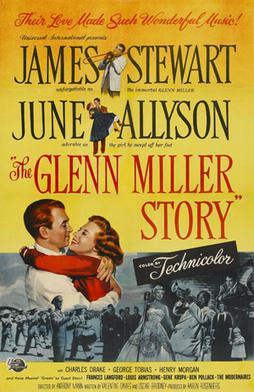
Why are we so enamored of biopics? The biopic at the center of my childhood was Anthony Mann’s The Glenn Miller Story (1954), starring James Stewart in the titular role with June Allyson as his doting wife, Helen. My parents loved this movie – especially the part at the end when Miller’s band plays “Little Brown Jug,” knowing it is Helen’s favorite. The Glenn Miller Story has it all: It’s a World War II movie, a musical of sorts, a love story, and it's chock full of famous jazz musicians in cameos playing themselves, including Louis Armstrong, Gene Krupa, and Tex Beneke to name only a few. A good biopic needs a hero (or villain), and the bandleader is dutifully lionized. Miller overcomes some odds though not enough to make it a little guy’s conquering tale, but his plane going MIA over the English Channel makes his story consummate biopic fodder. 
Biopics are about nostalgia and our, almost always romanticized, versions of the past. We can get quite smug vetting costumes (especially military uniforms) and hairdos and set dressing. (Larger historical questions aside, my anachronism alarm went off in Selma's kitchen scene when MLK pulls a plastic bag of garbage from under the sink, then gets a fresh bag – more than a decade early.) Over-restored vintage automobiles glide through the streets of period movies, shinier and sleeker than they were when they rolled off the factory production line. 

We used to take biopics and based-on-a-true story movies on their own terms, as embellishments of the truth. We seemed to tacitly agree that we were not reading a biography or a history book. (Surely no one has mistaken Joseph L. Mankiewicz's 1963 Cleopatra for an accurate account of Ancient Egypt's relationship with Rome or William Wyler's 1959 Ben-Hur as a reliable record of the Roman occupation of Judea.)  Critics and audiences alike spent decades, nay centuries, with utterly inexact, even erroneous dramatic retellings of historical people and events. We would hardly count on Shakespeare and his English history plays as analyses of the intricacies of the Hundred Years War. Shakespeare was more interested in crafting commentaries on the politics of his own time than he was in documenting historic fact and was riding a 16th century wave of popularity for chronicle plays about the English monarchy. He used Holinshed’s Chronicles (1587) as a major source, itself bowdlerized, passages considered offensive to the Queen having been removed.[v]

Charlton Heston in Joseph L. Mankiewicz's 1963 Ben-Hur
An interesting case of a superior film emerging from seriously skewed history is Sergei Eisenstein’s 1944 Ivan the Terrible. It was to be made to Joseph Stalin’s strict demands, but for the second half, Eisenstein turned it from hagiography into a blistering portrait of the mad Russian tsar. (Party leaders suppressed the second half until 1958. Work on Part III was halted and any existing film for it destroyed.) 
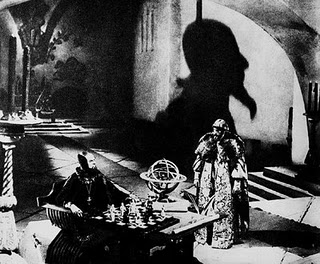
Sergei Eisenstein’s 1944 Ivan the Terrible
In recent decades, however, once the poster and trailer announce “Based on a True Story,” the “gotcha” trap is set. The turning point seems to have been 1989, the year Oliver Stone was slammed for Born on the Fourth of July. The film initially met with a warm critical reception, but Diana West’s 1990 article for The Washington Times, “Does Born on the Fourth of July Lie?,” is typical of the ensuing onslaught. Based on the autobiography by Vietnam War veteran Ron Kovic, who co-wrote the screenplay with Stone, Born on the Fourth of July encountered a barrage of criticism for everything from collapsing multiple characters into one or inventing characters altogether to outright falsifying the record. Ava DuVernay’s Selma is facing similar reproofs. Selma confronts a further challenge in that it is not based on autobiography so at the same time the grand historical narrative is expected to be accurate, the personal story must be conjectured.

Since 1990, film makers have deployed variously worded disclaimers to avoid a torrent of accusations of inaccuracy. Closing credits end with statements along the lines of: "This story is based on actual events. Some incidents, characters and timelines have been altered for dramatic purposes. Certain characters may be composites or fictitious."

In her excellent 2007 article for the Washington Post, “Life’s a Blur,” Ann Hornaday[vi] argues:
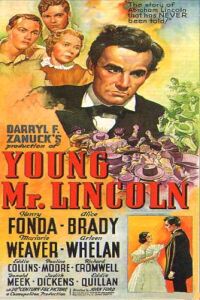
We love our biopics, sometimes we hate our biopics, but one thing's for certain: We desperately need our biopics. Since Thomas Edison's 1895 The Execution of Mary, Queen of Scots [sic], film has been the favored vector for creating a usable past, from Young Mr. Lincoln to Walk the Line. Biopics have told a nation who our heroes are, what deserves to be remembered, what counts as history. They tell us who we are. And precisely because movies are such a potent form of forging historical consensus, not only are they expected to hew to particular aesthetic standards (no "inspired by the many lives of," please, we like our biopics literal and irony-free), but factual standards as well.

Fast forward to 2013’s dueling biopics, Lee Daniels’ The Butler and Steve McQueen's 12 Years a Slave. The Butler may have been inspired by a true story, but it is not based on a true story as it claims. There was a person, Eugene Allen, who served presidents Truman to Reagan as a White House butler, but beyond that, pretty much everything about the character is pure fiction. Virtually nothing about the butler of the movie, Cecil Gaines, aligns with Allen's personal life. Yet I would argue that the created character is not the problem for The Butler: its problem rests in trying to cover so very much. As we march through the years and the decades, Daniels finally has to employ montage to squeeze in every historical benchmark. I tried to be generous and think, Well, maybe that's good for younger people who, unlike me, did not live through the times the narrative chronicles. That is to say, it works better as a history gloss than it does as a work of cinema. Unlike the decades-long The Butler, DuVernay wisely chose to train Selma’s focus on a limited time and space, though within those limits she may have taken too much liberty in the eyes of some viewers.

Unlike The Butler, McQueen's remarkably faithful adaptation of Solomon Northrup's autobiography, no matter how implausible a particular may seem, hews to the memoir’s narrative without feeling compelled to pull in every concurrent historical event. Perhaps what redeems 12 Years a Slave is that Northrop had already distilled his experience through memoir, had already shaped his story into a narrative arc through the natural editorializing that memory affords.

Chiwetel Ejiofor and Michael Fassbender in Steve McQueen's 2013 12 Years a Slave
I say natural editorializing because the activity is innate and inherently human. One of the best explorations of this phenomenon is Sarah Polley’s 2013 documentary, Stories We Tell, in which she tries to tease out the “truth” of her mother’s intimacies. “When [Polley] found her answer, and talked to her father and siblings about it,” Mary Jo Murphy writes in the New York Times, “she became fascinated with how each of them was ‘telling the story and embellishing the story and making the story their own.’ The act of telling the story, [Polley] said, ‘was changing the story itself.’”

Our dual usages of both the words “myth” and “fiction” are diametrically opposed. Both can mean a falsehood: Don’t believe that; it’s just a myth, a fiction. At the same time, we use the word “fiction” as a synonym for imaginative literature and the word “myth” to describe the organizing principles, the archetypes, of the collective unconscious (Carl Jung) or archaic remnants (Sigmund Freud). I call it “truth with a capital ‘T.’” Throughout millennia, the human community has created astonishingly similar mythologies as a means to explain the mysteries of life in the midst of an indifferent universe.

On the personal level, we are each unconsciously involved in an ongoing creation of the myth of an individual life – our own – a process of constant refinement and adjustment. I have an experience on Monday morning that I want to relate to my lunch companion. Without consciously knowing I am doing so, I register his reactions – why isn’t he surprised here, why isn’t he empathetic there, why doesn’t he laugh here, why doesn’t he find that unfair? When I get back to the office and tell the story again, it is a better story – and by the end of the week, with the telling, my listeners come to respond with emotions more aligned with my expectations. Life is messy, complicated, bewildering. We give it meaning through ordering, through the stories we tell, and myth, fiction, and poetry speak more profoundly to the heart than reportage.

On Oscar night, I will not be rooting for the biopics. With notable exceptions, biographical films and based-on-a-true-story vehicles rarely achieve cinematic greatness, constrained as they are by their biography and the historical record. Instead, I am pinning my hopes on the stories, the creative imaginings that open the window to that elusive truth with a capital “T” – like Birdman and Boyhood, each of which in its own uniqueness tells us something, as Raymond Carver does, of what we talk about when we talk about love.

History is biased by opinion and zeitgeist, memoir by memory and desire, and all telling by point of view. The avant-garde Soviet director Dziga Vertov belonged to the kinoks (“kino-oki,” cinema-eyes) movement, which sought to abolish all forms of non-documentary film, insisting that the cinema of the future be the cinema of fact – “life caught unawares,” as Vertov famously proclaimed. He called the series of 23 newsreels he directed between 1922 and 1925 Kino-Pravda, Cinema-Truth. His 1929 silent documentary, Man with a Movie Camera, is considered a landmark for its innovative cinematic techniques. It chronicles a day in the life of modern Soviet citizens using double exposures, fast and slow and stop motion, freeze frames, jump cuts, split screens, canted angles, backward footage in order to push the boundaries of linear film. The irony, of course, is that life is linear and does not present itself in double exposures, fast and slow and stop motion, freeze frames, jump cuts, split screens, or backward footage. 


Two images from Dziga Vertov's 1929 Man with a Movie Camera
Biographical films and films based-on-a-true-story can give us a taste of a person, an era, a pivotal moment in history, an extraordinary individual achievement, but they can only be instructive up to a point because more often than not, in order to be good, they must be truer to narrative truth than they are to historical truth and sacrifice detachment for fascination. Better to plumb history through an historian's scholarship than biographical film, which is really historical fiction. Even so, the astute student of history does not rely on a single history but many, because the true historian knows she will encounter predilections in them all. Polley knows that most of us, “We do get stuff wrong and everything is kind of subjective. That’s part of who we are as human beings. We tell stories as well as we can but generally kind of sloppily even when we’re trying our hardest.” 
Sarah Polley's 2013 Stories We Tell 
~~~~~~~~~~~~


[i] Thomas Edison’s 1895 The Execution of Mary Stuart fails to make lists of biographical film. Coming in at only 18-seconds, it is not a story of a life but an enactment of an event. Some film critics cite Alfred E. Green’s 1929 Disraeli as the first biographical film. The role had been written for the actor George Arliss, who portrayed the 19th century British prime minister in stage productions that toured from 1911-1916, in Henry Kolker’s 1921 silent picture, and again in Green’s talkie.

[ii] That Chazelle's film is largely autobiographical makes the Academy’s decision to exclude Whiplash from the Original Screenplay category truly baffling. The story of how the Academy may have confused it with an adapted script is convoluted, but Deadline awards editor and columnist Pete Hammond explains (but does not justify) it.

[iii] The Chilean film No, directed by Pablo Larrain, is an historical drama about a man who helped topple the Pinochet regime; Montreal-based director Kim Nguyen's War Witch is based on the actual events of a child soldier in Burma re-envisioned in the Democratic Republic of Congo; Danish director Nikolaj Arcel's A Royal Affair is about the mentally ill 18th century Danish King Christian VII and the affair between his queen and the royal physician; and the Norwegian directors Joachim Rønning and Espen Sandberg's Kon-Tiki is an historical drama about the ethnographer Thor Heyerdahl's 1947 expedition undertaken in an attempt to prove his theory that people from South America settled in Polynesia in pre-Columbian times; even the French director Michael Haneke's Amour was based on his own family experience.

[iv] The 2004 BBC television film Hawking has Cumberbatch in the title role and is much more about physics and the collaborative process than The Theory of Everything. It also gives the love story the back seat by ending before the wedding, which makes it, to my mind, the better movie for avoiding the soap opera quality of The Theory of Everything.

[v] The expurgated passages were published separately in 1723; a complete reprint appeared in 1807.

[vi] Hornaday takes up the question of being on the side of art or the side of truth again in the current controversy over Selma in “Film Fact-Checking Is Here to Stay. So Let’s agree on Some New Rules.” (Washington Post, January 3, 2014)

December 12, 2014

2014: THE FOURTH ESTATE

Burke said there were Three Estates in Parliament; but, in the Reporters' Gallery yonder, there sat a Fourth Estate more important far than they all. ~~ Thomas Carlyle, On Heroes and Hero Worship 1841 writing of Edmund Burke's 1787 address in the parliamentary debate on opening the House of Commons to the press

Giuseppe Pellizza da Volpedo, The Fourth Estate   1901
Museo del Novecento, Milan

The Estates of the Realm – clergy, nobility, commoners – had been recognized in Europe since the Middle Ages, and those estates controlled the information people received through official bulletins. Gutenberg's mid-15th century invention would change that. As printing gradually became commonplace, so did independent gazettes. Then, as newspapers flourished in the 17th century, the concept of a Fourth Estate began to emerge to describe the responsibility an independent press has to keep the other estates in check. The centrality of this idea had become well-established by the time of the American colonies, and the framers of the Constitution considered it essential. Our own three branches of government – executive, legislative, judicial – are intended to be balanced by a fourth codified in the First Amendment of the Bill of Rights: "Congress shall make no law...abridging the freedom of speech, or of the press...."
America's first news sheet
1st edition published August 7, 1721
by James Franklin, Benjamin's younger brother

In the United States, the Fourth Estate historically has meant news media, especially print journalism. That is not to say that journalism has always been regarded with trust and respect. That gadfly of American letters H. L. Mencken once remarked, "American journalism (like the journalism of any other country) is predominantly paltry and worthless. Its pretensions are enormous, but its achievements are insignificant."

Nevertheless, in the main our reliance on our most trusted journalistic institutions (e.g., the New York Times, the Washington Post, the International Herald Tribune, among others) remained secure until the turn of the 21st century, when the sullying effects of Rupert Murdoch and his ilk, the encroachment of cable news, the unfettered nature of the Internet, and the demise of print journalism were beginning to have a devastating effect on even the most respected news sources in the United States. We now have what some call the Fifth Estate, associated with bloggers and other unconventional media that operate outside – sometimes in opposition to – the mainstream.

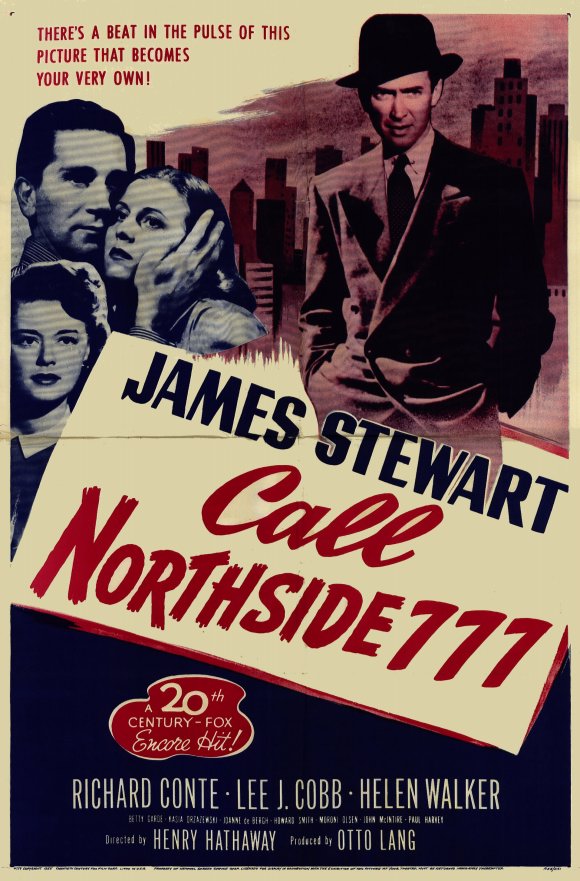
Three kinds of films explore the Fourth Estate: stories of the brave reporter who unearths the truth; tales of exploitative charlatans; and documentaries by and about journalists. Among the earliest of the first category, films in praise of journalists as skeptical heroes, is Henry Hathaway's 1948 Call Northside 777 based on Chicago reporter James McGuire whose 1944 news stories exonerated Joseph Majczek and Theodore Marcinkiewicz of the 1933 murder of a Chicago police officer. James Bridges' 1979 The China Syndrome was not based on a true story but proved prescient with Three Mile Island's nuclear meltdown 12 days after the film's release. Alan J. Paluka's 1976 All the President's Men was based on Bob Woodward and Carl Bernstein's investigative reporting on Watergate for the Washington Post. As Ben Bradlee, the late, great executive editor for that paper, observed, "No matter how many spin doctors were provided by no matter how many sides of how many arguments, from Watergate on, I started looking for the truth after hearing the official version of a truth."

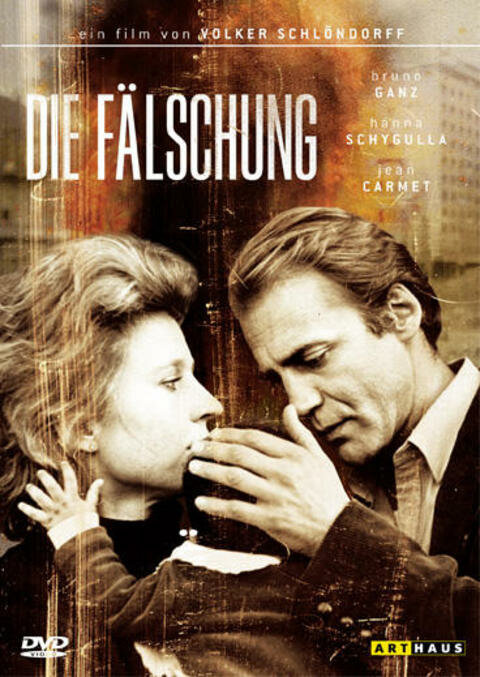
Then there are the films that paint reporters as cynics who exploit the public's insatiable appetite for scandal, carnage, gore, and scapegoating. Orson Welles's 1941 Citizen Kane, the granddaddy of news-centered films, is based on William Randolph Hearst and the political machinations of his infamous yellow journalism empire. Haskell Wexler's 1969 Medium Cool explores the schadenfreude of the evening news, and Volker Schlöndorff's 1981 Circle of Deceit (Die Fälschung) looks at war's numbing effect on individual conscience.

Sidney Lument's 1976 Network morphs an evening news anchor into the entertainment division's sideshow. Howard Beale doesn't grasp it, but studio execs understand that populist anxiety – as economic stability is beginning to erode and civil rights becomes the law of the land – hungers for a villain on which to pin its amorphous blame. Beale's vague rants directed at ill-defined scapegoats fit the bill and presage the 24-hour news cycle that will be Fox and MSNBC, et al. (When the network proposes a 24-hour news program to Ron Burgundy in Anchorman 2: The Legend Continues, he says, "That is without a doubt the dumbest thing I've ever heard of," but of course, the laugh derives from the fact that we've known for years what Burgundy as yet does not.) Be it local networks or national news corporations, high ratings are the reward for pandering to small-mindedness, blood lust, and the lowest common denominator.
~~~~~~~~~~~~
Michael Cuesta's Kill the Messenger belongs in the first camp of journalist as hero, and like All the President’s Men, is based on actual events. The messenger is Gary Webb, energetically portrayed by Jeremy Renner, whose reporting for the San Jose Mercury News exposed the link between the CIA, Nicaraguan contras, and the mid-'90s crack cocaine epidemic that spread through LA's black neighborhoods. 

Webb very much understood what the Australian-British journalist and documentarian John Pilger has said: "It is not enough for journalists to see themselves as mere messengers without understanding the hidden agendas of the message and the myths that surround it." Unfortunately for Webb, not only did government agents fight to maintain their cover-up, but without a Ben Bradlee behind him, the news media establishment turned on one of its own. Woe to the naïve reporter who fails to understand that the media's responsibility is not to some ideal of informed citizenry but to a tacitly understood pact of complicity with those who govern. Kill the Messenger's postscript explains that by 1998, when the CIA finally acknowledged their guns-for-drugs cover-up, the nation was so in thrall to the salacious Monica Lewinsky-fest that the public ignored the CIA report. (I imagine the same will be true for the Senate Intelligence Committee's report on the CIA's detention and interrogation practices – i.e., torture – at Guantánamo.)

Jeremy Renner as Gary Webb in Michal Cuesta's Kill the Messenger

Public apathy toward serious issues and appetite for the sensational inform the "give 'em what they want" reporting that functions as the fourth cardinal point of the he-says / she-says / detective-says tetrad of David Fincher's Gone Girl, based on Gillian Flynn's novel. Consciously aware that Gone Girl is a fiction, a part of me nevertheless was occupied wondering what serious news stories were being ignored while the media circus whipped up John and Jane Q. Public.
The press descends in Gone Girl

Gone Girl is very much in the vein of such classics as Billy Wilder's 1951 Ace in the Hole, Elia Kazan's 1957 A Face in the Crowd, and Lumet's Network, but the frenzied "news" programming that functions as the foreground of those films is moved to the background in Gone Girl, while the foreground seethes in eerie calm. As the story unspools, a Fox-like network improvises sensational speculation, which the public eagerly gloms up. Another comparison that comes to mind is Gus Van Sant's 1995 To Die For in which the weather girl who dreams of becoming a famous news anchor manages to get away with murder through a string of manipulations.
Rosamund Pike and Ben Afflick in David Fincher's Gone Girl

Nightcrawler, Dan Gilroy's directorial debut, steals into the lurid world of local TV news casting ever on the prowl for the most prurient stories to feed our basest instincts. Jake Gyllenhaal's unblinking, figuratively and literally, Lou Bloom is not your usual drifter. He's jobless, but he is seriously looking for work. In the meantime he is not going to allow unemployment to stand in the way of his industriousness as he misappropriates metal – chain-link fence, copper wire, manhole covers – to sell for scrap. There's an unlikely side to this walking ghost of a man: he has internalized pretty much every motivational and self-improvement platitude ever cooked up by evangelical management gurus. Bloom may not be a scholar, but he has access to the Internet and has trolled it for every shred of positive thinking and tips for success he can, which he has structured into his own private – and beyond reproach – theory of everything.

In an interview with Audie Cornish on NPR, Gyllenhaal explained that he prepared for the part as though preparing for a stage role, memorizing the script in its entirety before production began. The result is a droning staccato – at once vacant and solidly self-assured – of vapid expressions and threadbare bromides. "On paper it doesn't look so bad, 'but out in the world – taking a few morals out of the equation – it can be pretty dangerous,' Gyllenhaal says."

Jake Gyllenhaal is Lou Bloom in Dan Gilroy's Nightcrawler

Lou Bloom stages his shot for the evening news in Nightcrawler

The third cinematic explorations of the Fourth Estate are journalistic documentaries and documentaries about journalists, but first, a look at a couple of anomalies. Patrick Sheane Duncan's 1989 84 Charlie MoPic is not a documentary but shot in documentary style and deserves mention here for creating a powerful fictional amalgam of the actual reporting from the front lines that made the Vietnam War tangible and immediate for the home front. Presented from the camera's point of view, 84 C MoPic follows a Long Range Reconnaissance Patrol (LRRP) through the jungles of Vietnam. Not only did a draft army do the fighting in the Vietnam War, which meant that war was personal to almost every citizen of the United States, but war correspondents brought the realities of combat into our living rooms every evening from 6:30-7:00. Less than a decade later that would cease to be the case. Television news no longer bears witness to war. Instead, to suss out the truth of political, economic, technological, ecological, medical, and agricultural conditions one must rely on reputable print and online news sources, hear out whistle blowers, and seek out documentaries, of which we are fortunate to have many brave examples.


Like 84 C MoPic, Jon Stewart's Rosewater is not a documentary, yet both are about real-life journalists if in different respects. Stewart calls Rosewater a fictional adaptation. The screenplay is based on Iranian-born journalist Maziar Bahari's 2011 memoir Then They Came for Me, written with Aimee Molloy, which recounts his arrest while in Iran on assignment for Newsweek, covering the 2009 elections and the days of political upheaval that followed. The Mexican actor Gael García Bernal plays Bahari in his on-the-ground reporting and in flashbacks that establish his family dynamic juxtaposed with his 118-day nightmare of imprisonment.

Bahari's torturer Javadi, superbly portrayed by Kim Bodnia, emerges not as a monster but a cog in a corrupt bureaucracy that is rotting his soul. He douses himself with the rosewater of the title in a futile attempt to mask the fetor. Stewart structures the film contrapuntally on several levels, oscillating between Bahari's solitary confinement and Javadi's grillings; between the antagonists in the interrogation room, Bahari's interplay with his interrogator measured to endure not only the brutality but the irrationality; between the ruthless reality of captivity and the scenes of the parallel universe Bahari has said he created in his psyche to endure – a cadenced rhythm of imagined conversations with his sister, his wife, his dead father – conjured with the songs of Leonard Cohen as the internal soundtrack for his memories. "All of a sudden this universe was created, this universe that was guarded by Mr. Leonard Cohen, and it was just ridiculous to me that this old Jewish Canadian, and one of the most cynical poet songwriters in the world, managed to save me in the heart of the Islamic Republic."
Gael García Bernal as Maziar Bahari in Jon Stuart's Rosewater

In one of his essays, the Nigerian writer Chinua Achebe notes that "The foreign correspondent is frequently the only means of getting an important story told, or of drawing the world's attention to disasters in the making or being covered up. Such an important role is risky in more ways than one. It can expose the correspondent to actual physical danger; but there is also the moral danger of indulging in sensationalism and dehumanizing the sufferer."

It is a tragic fact that kidnapping, torture, and possible death have become commonplace risks for today's journalists. Rosewater was released as ISIS stepped up its barbaric slaughter of journalists: British journalist John Cantlie and American journalists James Foley and Steven Sotloff, as well as British aid workers David Haines and Alan Henning – gruesome events that received significant media attention. Little has been made of the risks to Iraqi journalists, however. As of October, The Guardian reported, at least 17 Iraqi journalists have been killed and many more kidnapped, according to the French organization Journalists without Borders (RSF), among them Raad Mohamed al-Azaoui, cameraman and photographer for Sama Salah Aldeen TV, and Mohanad al-Aqidi, the Mosel correspondent for Sada news agency. Just days ago, al-Qaida terrorists killed American journalist Luke Sommers, along with a South African teacher Pierre Korkie, during a failed U.S. rescue attempt.
Kim Bodnia as Javadi and Gael García Bernal as Maziar Bahari in Rosewater

Stewart has created something larger than a biopic in Rosewater. He has a direct connection to the story: That Bahari appeared in one of The Daily Show's fake interviews and went along with the joke that he was a spy will be among the ludicrous charges against him. So on a personal level, Rosewater is rather like an atonement for that misconstrued moment. In the larger view, Rosewater is Stewart's homage to journalists everywhere, for the sacrifices they make in their crucial role as the Fourth Estate, especially those who risk life and limb to bring us first hand reports from the deadliest corners of the earth.

Film critic Godfrey Cheshire, who first met Bahari in 1997, shared a trenchant insight into Rosewater in his review for rogerebert.com: "The concept of spy talk being offered up for laughs...[is] entirely outside the frame of reference of a pious torturer whose life is dedicated to the defense of Iran's theocracy and its Supreme Leader, Ali Khamenei. In one sense, the two mindsets we see colliding in that interrogation room – one medieval, one modern – form the crux not only of Rosewater's drama, but also of Iran's ongoing struggle over its identity and place in the world."
Leonard Cohen's "Dance Me to the End of Time"
Bahari conjures memory and music.

The Fourth Estate flourishes in contemporary documentary film making. Citizenfour is Laura Poitras's chronicle of Edward Snowden's efforts to expose the inexorable expansion of the United States government's intelligence apparatus designed to gather every bit of data generated by each and every one of its citizens. The title derives from the nom de guerre Snowden gives himself in order to initially make contact with Poitras. Snowden does not designate himself a citizen without reason nor is the choice of the number four arbitrary. The pseudonym also echoes Welles's Citizen Kane.

The greater part of Citizenfour takes place during a succession of eight days in an hotel room on an upper floor of a Hong Kong skyscraper. Unlike the almost monomaniacal Julian Assange, Snowden is uniformly self-effacing and aware of his limitations. Familiar with Poitras's work, Snowden has enlisted her help both as filmmaker and liaison to enlist the aid of Glenn Greenwald and Ewen MacAskill of The Guardian.

From the start, Snowden wants to make clear to his co-conspirators that he knows the media's tendency to eschew substance for personality. He does not want his actions to become a story about Edward Snowden. He has told no one – his companion, family, friends, colleagues at the NSA or Booz Allen Hamilton. No one knows what he has done or his intentions because he wants them to suffer as little damage as possible. He explains to Poitras, Greenwald, and MacAskill the levels of encryption they must employ, not simply to protect the information he will leak, but to protect themselves. If anything is going to happen to anyone, he insists, it will happen to him. He repeatedly explains that he is not qualified to decide what information should be released and what withheld, which is why he has engaged respected investigative journalists who can be trusted to make those difficult decisions. One of the strengths of Jon Stewart's Rosewater is that it never plays as a thriller; one of the strengths of Citizenfour is that it does. It is a chilling indictment, not only of our government's subversion of our laws but of the degree to which we as citizens have sat blithely by and let it happen.
Edward Snowden and Glenn Greenwald

People may feel that constant surveillance helps us make informed consumer decisions, gives us directions to where we want to go, provides us with something before we even know we want it. But as Greenwald argues, the insidious result is that people who are being watched self-censor. Free speech, and by association a free press, quickly erode. After Greenwald's series of stories revealing the NSA's mass surveillance programs appeared in The Guardian, Greenwald's partner David Miranda, returning from Berlin where he had visited Poitras, was detained and questioned upon his arrival at London's Heathrow Airport. Officials confiscated all of his electronics equipment. Is this the world, you have to stop and ask yourself, that I want to live in?

"All you have to do [to win a Pulitzer Prize]," the novelist David Baldacci has said, "is spend your life running from one awful place to another, write about every horrible thing you see. The civilized world reads about it, then forgets it, but pats you on the head for doing it and gives you a reward as appreciation for changing nothing." All of these films are about the Fourth Estate, which is to say they are about ourselves as citizens in a world we claim to want to make increasingly democratic. In the instance of Kill the Messenger, Rosewater, and Citizenfour we are complicit in the persecution of the messengers. Taking the path of least resistance, we can remain blinkered with comfortable biases and unchallenged opinions rather than face difficult truths that require complicated solutions and sacrifice. With Gone Girl and Nightcrawler we are also complicit, our lust for scandal-mongering and sensationalism overriding our own self-interest.

Journalism will always be a double-edged sword. We would do well to cease to patronize the yellow press, but our appetite for it may be so much a part of our human make up that we will never overcome our craving. We would do better to  seek out principled journalism, understand the vital role it serves, appreciate those willing to shoulder its risks for our sake – and undertake the transformation it challenges us to bring about.


December 4, 2014

2014: AFFLUENCE AND ITS DISCONTENTS

We are not provided with wisdom, we must discover it for ourselves, after a journey through the wilderness which no one else can take for us, an effort which no one can spare us, for our wisdom is the point of view from which we come at last to regard the world.
~~Marcel Proust, In Search of Lost Time Vol. II: Within a Budding Grove, 1919

On the way to lunch in a colleague's car a song popped up from his iTunes collection, and he remarked how great was the lyric "I don't want to grow up." To cite it, I googled for the lyric and instead found a myriad of songs with essentially the same title: "I Don't Want to Grow Up" (1985) by the Descendents; "I Don't Wanna Grow Up" (1992) by Tom Waits and covered by the Ramones (1995); "Don't Wanna Grow Up" (2003) by the Sacramento-based Willknots; "Don't Grow Up" (2010) by Taylor Swift; and in lyrics rapper Machine Gun Kelly appended in 2013 to Rise Against's "Swing Life Away" (2004): "I don't want to grow up don't nobody like you when you're 23."

The sentiment of these songs – "I don't want to be like you... You're a fool"; "I'd rather stay here in my room"; "I don't want to figure [adulthood] out"; "Wish I'd never grown up" – differs from the pop standard "Young at Heart" (1953) popularized by Frank Sinatra among others or Bob Dylan's ballad "Forever Young" (1972). "Young at Heart" may be a little cloying but it celebrates determination and the acceptance of failure with grace. "Forever Young" is a litany of hopes: May you be generous, humble, creative, righteous, true, courageous, strong, engaged, and grounded. It is an anthem, a hymn, a prayer. Neither songs' lyrics reject work, responsibility, community, and self-awareness.

There was a time when men and women made headway in their 20s toward life's milestones. In the last several decades, however, social scientists have been scrambling for a terminology – "emerging adulthood," "delayed adolescence" – to describe the decade from 20 to 30. Judging by popular culture, attire, and leisure activities – reliable reflections of the zeitgeist all – after 30 and even well into their 60s many Americans have no aspirations to become adults, indeed strenuously avoid it. There's no need to cite examples (suffice it to say that a sitcom actually called Arrested Development about the culture of McMansions, materialism, and psychological manipulation ran from 2003-2006 and was revived for an additional season in 2013 on Netflix); the attitude is ubiquitous in advertising, television, movies, video games, politics – even churches struggle to be more "relevant," i.e. youth oriented.

I am not mounting a defense of tradition. Both marriage and children have the potential to feel like albatrosses and too many harness themselves with one, the other, or both for all the wrong reasons. These days, education can translate into staggering student loans that can be a financial burden for decades to come, and home "ownership" is a euphemism for equally burdensome debt. What I find wanting in a society permeated with the permanence of adolescence and resistance to responsibility and self-sufficiency is the abdication of growth itself – of curiosity and achievement, of what it means to be human, of physical and psychological maturation. If untethered twenty-somethings were making conscious decisions to become contemplatives, I could respect self-sacrifice in the quest for enlightenment. If they were taking political action by joining collectives and removing themselves from the grid, I'd say, more power to you. If they were joining the Peace Corps, volunteering at homeless shelters, or giving music lessons to at-risk kids, or, or, or... I could applaud. Instead, many unreconstructed adolescents don't seem to be doing much of anything at all.

The golden myth of America as the land of possibility galvanized wave after wave of immigration through the 19th and early 20th centuries. Hard work and ingenuity were encouraged, admired, and often rewarded. Then the mounting excesses of the fin de siecle financial class brought the house down on Black Tuesday 1929, and what had already been a hard life for many became harder still. Franklin D. Rooselvelt's New Deal notwithstanding, many economist argue that without World War II, the United States economy would not have recovered, but recover it did.

The war brought Americans together in solidarity and shared self-sacrifice. That sense of belonging persisted after the war as the United States experienced unprecedented prosperity due in no small part to the passage in 1944 of the G.I. Bill, which provided money for college education, small business investment, and home mortgages. In the next decade, Dwight D. Eisenhower championed the Federal Aid Highway Act of 1956 and the National Aeronautics and Space Administration in 1958. Despite a growing military presence in south Asia, the '60s dawned as John F. Kennedy campaigned for what would become the ambitious Apollo manned space program. Together union advocacy, FDR's safety net programs like Social Security, the G.I. Bill, infrastructure investment, and the research and development programs of the '50s and '60s paved the way for middle class upward mobility. 

Through the 1950s and '60s, the nation rode a wave of optimism that experienced its first serious abatement in 1973, ebbed and flowed throughout the 1990s and 2000s, until the bubble burst again in 2008. While the bottom of the heap has yet to recover from the Great Recession, the people at the top have done just fine, and the people in the middle – whatever "middle" means these days – have managed. They and their children have never experienced – nor witnessed – the kind of destitution openly on view across the nation in the 1930s. We have found ways to put those unable to participate in prosperity out of sight – and therefore, out of mind.

Optimism and prosperity have devolved into self-absorption, rapacity at one end of the scale and torpor at the other, and an unprecedented sense of entitlement. If aging has not been turned into a sin, it has at the very least become a vice. Not surprisingly, today's movies are filled with juvenile characters of all ages because arrested development is the prevailing predisposition of our era. This year some of the movies that touched on these phenomena were remarkably good, some were mediocre, but they all demonstrate the pervasiveness of childish adults accustomed, or hoping to become accustomed, to lives unburdened by responsible behavior. Without affluence you have to grow up. Without material comforts, life is hard and unforgiving.

Of the many archetypes identified by Carl Jung, puer aeternus – Latin "eternal boy" – dominates the American psyche and has become a Hollywood staple. At its best the puer aeternus represents the Divine Child from whom we derive a sense of possibility and hope, "the boy who is born from the maturity of the adult man, and not the unconscious child we would like to remain," as Jung says in Answer to Job. This is what Dylan means by "forever young." At its worst the puer aeternus suggests, not eternal youth, but arrested development – unchecked impulses, carelessness, indiscretion, narcissism, and callousness toward others.

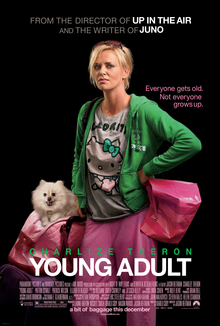
The man-child is no longer the exclusive purview of the male. Melissa McCarthy has practically created her own franchise out of the immature woman, this year adding Tammy to the collection. Judd Apatow, who codified the man-child movie and was strangely absent from this year's offerings, astutely realized he was missing the pocketbooks of half the population and remedied his oversight in 2011 with Bridesmaids. The same year Jason Reitman offered a rare serious – and searing – examination of this phenomenon. In Young Adult, Charlize Theron gives a riveting performance as a young adult fiction writer whose fans have moved on to the next new thing. Unable to distinguish make-believe from reality, she embarks on a stalker's mission to realize her high school sweetheart fantasies. Though Young Adult garnered critical praise, very few people saw it.

This year was awash in movies that make arrested adolescence the center of attention. Jason Bateman directed and starred in Bad Words in which a grown man robs children of spelling bee championships. Not having graduated from eighth grade, he (obnoxiously) argues he is not breaking any rules. Richard Shepard's Dom Hemingway stars Jude Law as a profoundly irresponsible, now ex-con, hell-bent on resuming every bad habit he's ever indulged including manipulating the emotions of his grown daughter. 

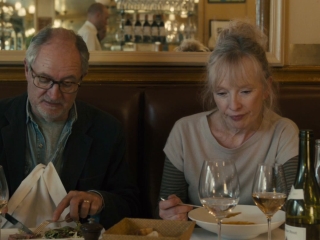
Roger Mitchell's Le Week-End has Jim Broadbent and Lindsay Duncan in complexly realized performances as Nick and Meg who ostensibly arrive in Paris to celebrate their anniversary. Their marriage has become a bittersweet affair with the emphasis decidedly on bitter, a fact that becomes ever more apparent as they skip out on meals they can't pay for, move into a hotel they can't afford, and plaster the walls of the room with clippings from art books they've maxed out their credit cards to buy.
Jim Broadbent and Lindsay Duncan in Le Week-End
In John Carney's Begin Again, Mark Ruffalo's Dan is a washed up record producer whose routine of booze, sleep, and hangovers infringes on accomplishing much of anything – until his muse in the guise of Keira Knightly enters the scene, and they can romp about the city making impromptu recordings and as much noise as they please, city ordinances be damned.

Two lovely little movies were Obvious Child and The Skeleton Twins. Donna Stern (Jenny Slate) in Gillian Robespierre's Obvious Child has the otherwise nonexistent movie wisdom to have an abortion, being self-aware enough to know she does not possess the maturity to be a mother. In an earlier era, she might not have had the luxury of that choice nor the sense of entitlement and affluent family that allow her to pursue a career as a standup comedian. Sanctioning abortion as a choice in a Hollywood movie is a welcome breakthrough, and Obvious Child is a nice little indie-esque film, but it would be nicer to see a mature character make a similar choice for more complex reasons.
Jenny Slate in Obvious Child
The twins in Craig Johnson's The Skeleton Twins have depression in common, one source of which may be that sense of entitlement they share with the other characters here. Kristen Wiig and Bill Hader deliver exceptionally nuanced performances as Maggie, a dental hygienist in upstate New York, and her brother Milo, who comes to live with her after his failure in the pursuit of an acting career in LA leads to a suicide attempt. Suicide is, after all, the surest way to avoid growing up. 
Kristen Wiig and Bill Hader in The Skeleton Twins
When we meet Eleanor in Ned Benson's tale of loss and possibility dashed, she, too, is recuperating from a suicide attempt, estranged from her husband, and living with her French mother and academic psychologist father (Isabelle Huppert and William Hurt). We will not know what tragedy has driven her actions until later in The Disappearance of Eleanor Rigby, but we sense it was profound. I can't suppress my exasperation, however, with a character whose self-absorption is absolute and who has unlimited economic means to drift. Despite a tragedy that encompasses all of the characters in the film, none exhibit much depth and hardly any compassion for the people around them. This is another cast of players buffered by affluence and excused by a general climate of anomie.
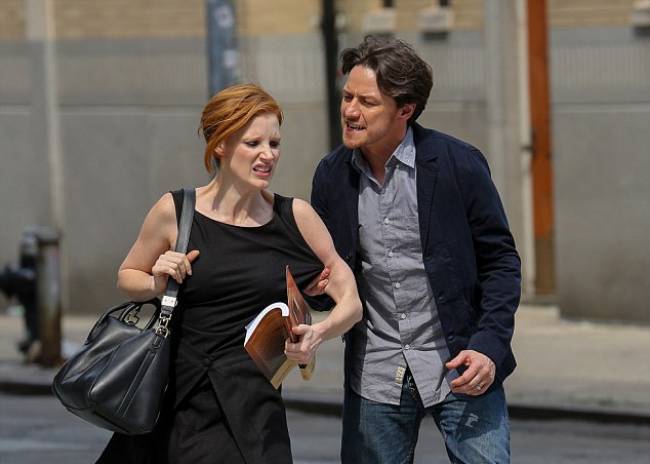
Jessica Chastain and James McAvoy  
in The Disappearance of Eleanor Rigby
The greatest offender of this year's lot is Megan (Keira Knightly) of Lynn Shelton's Laggies. Closing in on 30, she's finished her degree in psychology but doesn't have the empathy to listen to other people's problems. She lives with her boyfriend but prefers to hang out on her parents' couch. Despite her aimlessness, he asks her to marry him, to which she says yes. She then proceeds first to hang out and then to hide out with some high school kids she meets when they ask her to buy liquor for them, which she does because... well, because it's the irresponsible thing to do. And that's OK, America's movie-going audience seems to say, because we don't expect our characters, any more than we expect ourselves, to behave responsibly.

Keira Knightly and Chloë Grace Moretz in Laggies
I saved the most annoying – Hector and the Search for Happiness – and, at least on its surface, the oddest – Dear White People – for last.

The only contemporary phenomenon as ubiquitous as arrested development is the sense that happiness is an entitlement. I hesitate to blame Thomas Jefferson for this. After all, Jefferson never said that among our unalienable rights is happiness – only the pursuit of happiness. Nonetheless, we feel we have the right, and to that end therapists, self-help gurus, and book publishers have made a fortune. Google "books on happiness" and find not individual titles, but hits like "Amazon Best Sellers: Best Happiness Self-Help," "7 Essential Books on the Art and Science of Happiness," "Best Happiness Books (121 books) - Goodreads," "Must-Read Books on Happiness - Business Insider," ad infinitum...

French psychiatrist François Lelord wrote a trilogy of Hector books from 2002-2006 of which Hector and the Search for Happiness is the first. It was followed by Hector and the Secrets of Love and Hector and the Search for Lost Time. Speaking of affluence and anomie, despite learning from one of his patients that Hector's prices have not gone up along with other shrinks’, his life looks pretty darned well-heeled as do those of his private practice patients. Like the equally shallow Eat, Pray, Love, Hector and the Search for Happiness is just as unencumbered by economic limitations. Ah, that we could all globe-trot indefinitely in search of enlightenment and be asked to sacrifice so little along the way.
Simon Pegg as Hector in Hector and the Search for Happiness
I think I wanted to like Peter Chelsom's adaptation because the trailer brought to mind Tintin, the wonderful creation of Belgian cartoonist Hergé (George Remi), whose adventures as a precocious child investigative reporter take him round the globe to exotic locales and land him in hair-raising escapades. The syntax of the Hector title itself echoes Tintin – Tintin and the Secret of the Unicorn, Tintin and the Picaros – but also evokes, Proust notwithstanding, academic titles like Science and the Search for God or Suffering and the Search for Meaning or whatever is on the tables at your Barnes and Noble right now. Yet Tintin, unlike Hector, is a boy wearing the mantle of a man, consciously charging toward responsibility and risk. Tintin is self-possessed; he does not chase down adventure in an attempt to "find himself."

Simon Pegg even looks a bit like a not too grownup Tintin, and we get a cute-as-can-be Boston terrier to substitute for Tintin's trusty white wire fox terrier, Snowy, whenever Hector goes to his inner child. But the adult Hector remains as much a naïf as that inner child – which was perhaps meant to be endearing but instead is just irritating.

To say the series of adventures he encounters is implausible is an understatement. Nonetheless, the point would seem to be that Hector learn something, gain some insight through the journey. Unfortunately, the observations he records in his journal almost make Hallmark platitudes sound deep and reveal nothing that should not be within the innate grasp of a three-year-old. All this is to say, let us hope and pray no misguided soul decides to complete the trilogy.

Justin Simien’s Dear White People (which could be subtitled No, Virginia, there is no post-racial America...) oozes affluence across racial lines, and the question of identity (racial, sexual, political, gender) is its springboard. Set in a fictional Ivy League university, it is about political power struggles but political power struggles within an elitist, rarefied world. Racial tensions intensify when the administration decides the university should abandon its traditional policy of specialty dorms in the name of diversity, though the only dorm profoundly affected by that decision will be the school’s historically black residence hall. The euphemistic term the administration has devised for the strategy is “randomization.”
Dennis Haysbert as the dean of students and Brandon P. Bell as his son, Troy
All the usual collegiate suspects are here. The clueless college president (white); the long-suffering dean of students (black); the entitled president’s son who heads up the campus Harvard Lampoon-like humor magazine; the gang of scatological frat boys; the dean’s son, a big man on campus and the black residence hall's elected representative who dates a white girl – all of whom Simien fails to develop into anything more than types.

At the center are the only two fleshed out characters: the mixed-race student activist and the gay guy. The former is Samantha White (Tessa Thompson) who does the campus radio show of the title where she bluntly calls out white people’s hypocrisy with observations that should be self-evident, yet unfortunately for too many are not. This persistent absurdity is the source of the satire on which the movie hinges. (To wit: Dear White People, A white girl dating a black guy to get back at her parents is not cool.)
Tessa Thompson as Sam in Dear White People
The latter is aspiring journalist Lionel (Tyler James Williams) whose small frame is dwarfed not so much by an Afro as by hair he altogether neglects. Both are outsiders from beyond the white/black dichotomy Simien sets up and all the more welcome for it. Neither is defined by his/her outsider status as gay or mulatto. Sam undertakes a struggle to find her authentic self, but Lionel seems always to have been comfortable with who he is. He functions as the anchor of this story because he seems never to have thought of himself as black or gay or anything other than Lionel, a person he genuinely likes and respects.
Tyler James Williams as Lionel in Dear White People
Sam and Lionel are also the only characters in Dear White People, black or white, who actively eschew that overarching sense of entitlement. Having established his narrative in lap of luxury academe, Simien's conceit fails to deliver a sharpened understanding of the dynamics between the juxtaposed characters. They're all well-off, which puts them at a remove from most of us, though Sam and Lionel may be a tacit nod to affirmative action, or at least to economic diversity, as is the character driving the film's weakest plot line. Native south side Chicagoan Coco (Teyonah Parris) is careful not to let on to her roots. She hopes to improve her chances of making it into reality TV (as realistic as the kid who thinks she's going to be a fashion model or thinks he's going to be an NBA basketball player) by convincing the magazine’s white annual party organizers to theme their bash around blackface, which she plans to podcast.
Teyonah Parris as Coco in Dear White People
That this plot twist is inspired by numerous campus events around the country where this has actually occurred – still occurs – is not enough to make it work. It would have been more productive to move the plot using more subtlety and depth. Even so, something’s happenin’ here, even if what it is ain’t exactly clear…. (I include this link to Richard Brody’s piece for the New Yorker, which is hands down the best review of Dear White People out there.)

Earlier I remarked that what I find dispiriting about a society in thrall to adolescence, hostile to responsibility, and antagonistic to aging is the abdication of what it means to be fully human and engaged. No matter how hard we try to keep it at bay, age will come, and clichés aside, as Oscar Wilde warned, "sometimes age comes alone" sans wisdom. A central concern of the German poet Rainer Maria Rilke was the process of becoming, the constant evaluation of processes as an artist specifically and the process of becoming that is the arc of one's life in the larger sense. In Letters to a Young Poet (written between 1902-1908) Rilke writes, "Live your questions now, and perhaps even without knowing it, you will live along some distant day into your answers."
Kaitlyn Dever as Jayden and Brie Larson as Grace in Short Term 12
We need more characters who are engaged and willing to be vulnerable to experience – and they are not the teens of young adult trilogies who are really just another manifestation of our love affair with extended childhood and our collective cultural inertia. Contemporary dystopian and superhero narratives would have us believe we can just sit back because surely there are heroes in our midst destined to save us from the totalitarianism and ecological disasters a parents' generation has wrought. Fantasy is escapist not exemplary. Last year I was fortunate to have Destin Daniel Cretton's Short Term 12 show up in my theater. Grace and Mason are twenty-somethings who manage a short term teen foster care facility. They work patiently to deflect the pain and puncture the armor of the wounded souls who come to them. These are the kinds of quietly brave characters I long to see more of.

November 25, 2014

2014: THE ROAD

Land Ho!
In Land Ho!, directors Aaron Katz and Martha Stephens bring off a couple of feats. The movie is a remarkable piece of cinema verité. Especially seeing the trailer, you are convinced you are watching a documentary. In feature length, it reads more like a created work but still possesses a feeling of simplicity and lack of artifice that were probably more challenging to achieve than we might imagine. Much of Land Ho!’s charm derives from its retiring co-stars Paul Eenhoorn and Earl Lynn Nelson.
Paul Eenhoorn and Earl Lynn Nelson in Land Ho!
Which brings us to Katz and Stephens’ second feat. If recent American comedies featuring older actors are any indication, the old-coot-movie more often than not is just plain awful and a humiliation to its stars. 

Think The Big Wedding with Diane Keaton, Robert De Niro, and Susan Saradon. Despite some wonderfully nuanced performances as an older character in movies like Everybody’s Fine and Silver Linings Playbook, De Niro has become a staple of the old coot genre as a regular in the Fockers franchise, as well as in coot-as-unreconstructed-adolescent vehicles like Grudge Match and Las Vegas, which also stars Morgan Freeman and, it pains me to say, Kevin Kline. 

Michael Douglas and Diane Keaton teamed up this year in the barely okay And So It Goes, for which Sissy Spacek had the great good sense to turn down the Keaton role. Jane Fonda doesn’t have a great track record of late either. Grace in Peace, Love, and Misunderstanding and Hillary Altman in This Is Where I Leave You – remove the love beads from the former and the tchotchkes from the latter – are one and the same role. If we ignore the Focker mess, Barbra Streisand has exercised better judgment with little movies like last year’s The Guilt Trip, which brings us back to the road.
Paul Eenhoorn and Earl Lynn Nelson in Land Ho!
Land Ho! is the classic road movie, by which I do not mean that the characters are simply on the road, but that the trip unwittingly, at least at first, becomes the most ancient trip of all, the quest. Setting off on a journey into the unknown is the catalyst by which the hero (or antihero) gains self-knowledge. 

Eenhoorn and Nelson are Colin and Mitch, longtime friends by marriage. (Colin’s wife died; her sister divorced Mitch.) Colin has become accustomed to being alone, and one senses that even before his wife's death, he was a quiet sort. Mitch is randier and has not caught up with political correctness. Mitch has bought them tickets for a vacation in Iceland without telling Colin, which leaves Colin understandably miffed, but Colin is such a thoughtful man, he soon succumbs to his old friend’s enthusiasm.
Earl Lynn Nelson as Mitch in Land Ho!
What follows is a gentle journey of self-discovery and a kind, thoughtful glimpse into two aging individuals’ friendship, something Americans too often refuse to examine with anything less than inanity.

The Trip to Italy
In The Trip to Italy, Steve Coogan and Rob Brydon reprise their culinary junket to northern England in Michael Winterbottom’s 2010 The Trip. Neither is an epicure, yet they do not turn down the London Observer’s all-expense paid trips to stay in antiques-appointed hotels and dine on celebrity chef haute cuisine. All the while their improvisations are riffs on literature, culture high and low, and involve one upping each other in exacting impersonations.
Rob Brydon and Steve Coogan in The Trip to Italy
Whereas much of Land Ho!’s warmth and sensibility emerges from its realistic style, Winterbottom, Coogan, and Brydon set up a thespian conundrum as to whether the two actors are a) themselves, b) playing themselves, or c) playing characters who coincidentally have the same names and manner. 

Britisher Winterbottoms’s The Trip and The Trip to Italy, like the indie Land Ho!, make something meaningful out of a comedy about male friendship, unlike the man-boy vehicles Hollywood churns out like Dumb and Dumber, Bill and Ted, 21 Jump Street, et al. ad nauseum. Ultimately, it’s not about the food, or Italy, or who does a better Michael Caine – it’s about an old friendship in which each man, seeing his own advancing age in the other, clumsily, obliquely communicates his gratitude to the other.
Rob Brydon and Steve Coogan in The Trip to Italy

Ida
Considering the cinema verité illusion of Katz and Stephens’ Land Ho! and the complete blurring of the line between documentary and fiction in Winterbottom’s The Trip to Italy, it is interesting to note that Pawel Pawlikowski began his film career as a documentarian for British television. That said, what he has created in Ida is an austerely crafted tale of innocence and experience.


Agata Trzebuchowska as Ida
With Ida, Pawlikowski returns to the past – to his native Poland geographically and to Poland’s past historically. Set in the early 1960s, Ida is a Bildungsroman about a young novitiate, an orphan who has grown up in a convent apart from the world and apart from her own identity. The Mother Superior believes she must understand what she is giving up; otherwise, taking religious orders will involve no meaningful sacrifice. 

The Mother Superior tells the girl she must visit her only relative, an aunt who lives in Lodz, before she will be allowed to take her vows. Dutifully, Anna sets off to meet a complete stranger who is in many ways her diametrical opposite. Indeed, the young innocent will confront who she will be in the world, and her aunt Wanda, the cynical adult, will confront who she has been in the fallen world of corruption and disgrace. 
Agata Kulesza as Wanda in Ida
Upon the girl's arrival, a man not so discreetly departs the house as Wanda resumes her drink, lights another cigarette, and soon tells her niece that her name is not Anna but Ida Lebenstein – she is a Jew. 

As the two become acquainted we learn that Wanda was a state prosecutor in the brutal government of the Polish People’s Republic, which stopped at nothing to root out anyone even dubiously suspected as traitorous. Ida, unintentionally at first and then with precise volition, undertakes her initiation into the worldly, while Wanda sets about to confront her past and enlists Ida in a road trip with a very specific destination in mind.
 
For such a short film (Ida clocks in at a mere 80 minutes), Pawlikowski’s spare script and Lukasz Zal and Ryszard Lenczewski’s sparse and beautifully composed black and white cinematography manage to juxtapose, with no overt display, the historic macrocosm of the tragic pall of the Holocaust – the end of which only exacted a furtive day to day life under the shadow of Polish communism – against the microcosm of the intersection of the two women’s lives.

New York Times film critic A. O. Scott astutely observes that “Ida has some of the structure and feeling of an ancient folk tale. It concerns an orphan who must make her way through a haunted, threatening landscape protected only by her own good sense and a powerful, not entirely trustworthy companion.” In his 1976 book The Uses of Enchantment: The Meaning and Importance of Fairy Tales, Bruno Bettelheim argued that stories such as those collected by the Brothers Grimm allow children symbolically to grapple with the heart of darkness so as to prepare for life in a menacing world. Pawlikowski’s laconic tale explores the quest for identity as it takes up the question of the inevitability – even necessity – of wrongdoing. Ida suggests that the sins we commit to survive can be deserving of forgiveness.